Heterojunction PV modules with low silver content tested in world’s sunniest region

From pv magazine Latam
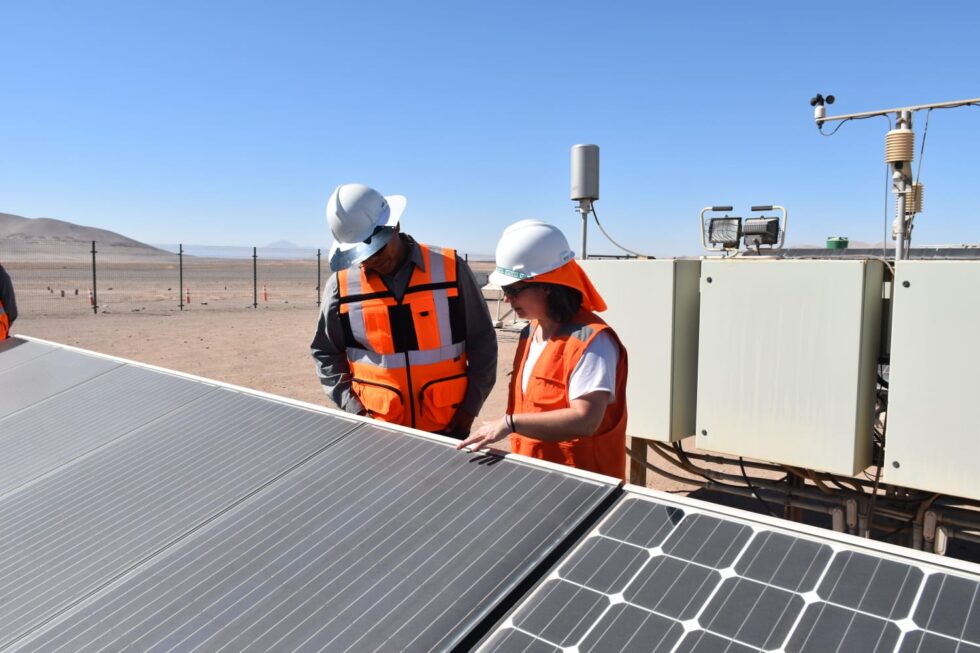
Atamostec, a private-public initiative supported by Chile’s government-run Production Development Corp, has begun testing heterojunction (HJT) solar modules produced with low silver content in the Atacama Desert, in Chile’s Antofagasta region.
The performance of the panels is being assessed at the Atacama Desert Solar Platform (PSDA) in partnership with the National Solar Energy Institute (Ines) under the French Alternative Energies and Atomic Energy Commission (CEA). The facility enables assessment of performance, efficiency, and durability in a real-world environment ahead of potential commercial scaling.
The ALPACA research project focuses evaluates different levels of silver-to-copper substitution in HJT modules. According to Atamostec, testing has achieved replacement rates of around 40%, and in some cases up to 70%, which the company says exceed international benchmarks reported to date under real operating conditions.
“The ALPACA project represents a concrete step toward a new generation of more efficient and sustainable photovoltaic technologies. By replacing silver with copper – a material abundant in Chile – we reduce costs and dependence on critical materials, while strengthening the country’s capacity to lead technological development with global impact,” said Felipe Valencia Arroyave, technology manager at Atamostec.
“Validating these advances under real-world conditions, such as those in the Atacama Desert, is key to accelerating their adoption in the industry,” Valencia added.
Atamostec and Ines, along with industrial partners such as ICS Konstanz, France’s Engie, Chile’s Colbun and Spain’s Mondragon Assembly, are also testing bifacial modules at the PSDA in the Atacama Desert, which is the world’s region with the highest solar radiation levels.
CEA-Ines is currently developing the HJT technology in partnership with PV manufacturer 3Sun, which is a unit of Italian energy company Enel. The two companies have also jointly developed DC/DC maximum power point trackers (MPPT). They are also working on high-efficiency bifacial PV panels.
This content is protected by copyright and may not be reused. If you want to cooperate with us and would like to reuse some of our content, please contact: [email protected].

Please login to comment