





From pv magazine Spain
Izpitek Solar, a Spanish startup specializing in the development of integrated PV solutions, has developed and implemented a unique solar project on the La Avanzada highway near Leioa, Biscay, northeastern Spain.
The project is located at the entrances to the tunnels, a result of the highway's undergrounding works that previously divided the city in two.
The installation has a capacity of 86 kW, achieved through 400 photovoltaic modules based on monocrystalline silicon cells, combining 185 W and 245 W units. The modules were specifically designed for mounting on circular structures and are seamlessly integrated into the architectural elements that form the entrance and exit points of the underground tunnels, without compromising either the geometry or the aesthetics of the infrastructure, according to the company.
From a functional standpoint, the energy generated is used entirely for self-consumption to meet the electrical demand of the tunnel's lighting system.
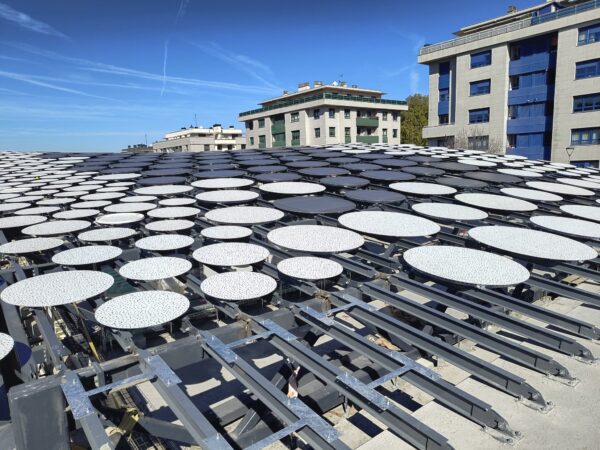
The installation is expected to generate around 80,000 kWh per year.
“This project is a benchmark for advanced architectural integration of solar power in underground road infrastructure,” a spokesperson from Izpitek told pv magazine. “It demonstrates the technical, functional and aesthetic viability of photovoltaics in complex urban environments that have traditionally been excluded from conventional solar deployment.”
The company said its panels can be adapted to “any architectural element exposed to solar radiation,” opening up new opportunities where conventional photovoltaic systems are not viable.
The project was promoted by Interbiak, a public company under the Provincial Council of Bizkaia, and executed by Ondoan S. Coop. It incorporates sustainability, energy efficiency and urban integration criteria.
Izpitek Solar’s proprietary technology is based on photovoltaic modules embedded in monolithic composite materials and is protected by several patents. According to the company, the technology offers greater freedom in mechanical and aesthetic design, weight reductions of 70% to 95% compared with conventional panels, and high durability by eliminating the risk of delamination, as well as a wide range of finishes, translucency options and substrates.
Izpitek added that it has a production capacity of 32 MW per year at its facility in Güeñes, in the Spanish province of Bizkaia, and said integrated photovoltaics are “a key tool for decarbonizing urban infrastructure and making use of previously underutilized surfaces.”
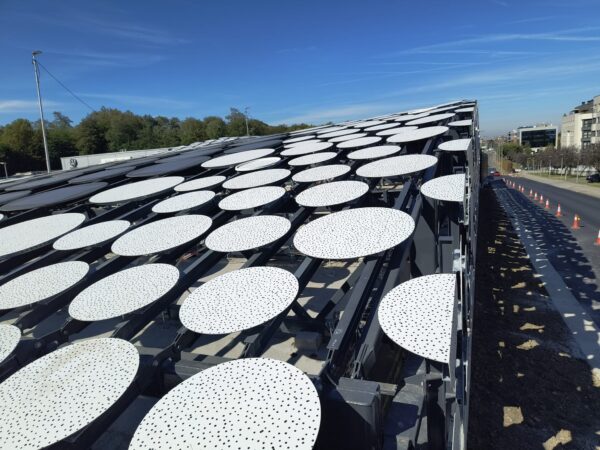
The company was founded on technological developments originating from the Tecnalia Technology Center and Branka Solutions. Its products use monocrystalline silicon cells with efficiencies exceeding 20%.
Izpitek offers customized mechanical designs that enable flexible, rigid and curved products, as well as other formats. The modules are available in a range of aesthetic options, with thicknesses as low as 0.4 mm, and can be installed using adhesives or screws, or fully integrated into existing structures.
This content is protected by copyright and may not be reused. If you want to cooperate with us and would like to reuse some of our content, please contact: editors@pv-magazine.com.

By submitting this form you agree to pv magazine using your data for the purposes of publishing your comment.
Your personal data will only be disclosed or otherwise transmitted to third parties for the purposes of spam filtering or if this is necessary for technical maintenance of the website. Any other transfer to third parties will not take place unless this is justified on the basis of applicable data protection regulations or if pv magazine is legally obliged to do so.
You may revoke this consent at any time with effect for the future, in which case your personal data will be deleted immediately. Otherwise, your data will be deleted if pv magazine has processed your request or the purpose of data storage is fulfilled.
Further information on data privacy can be found in our Data Protection Policy.