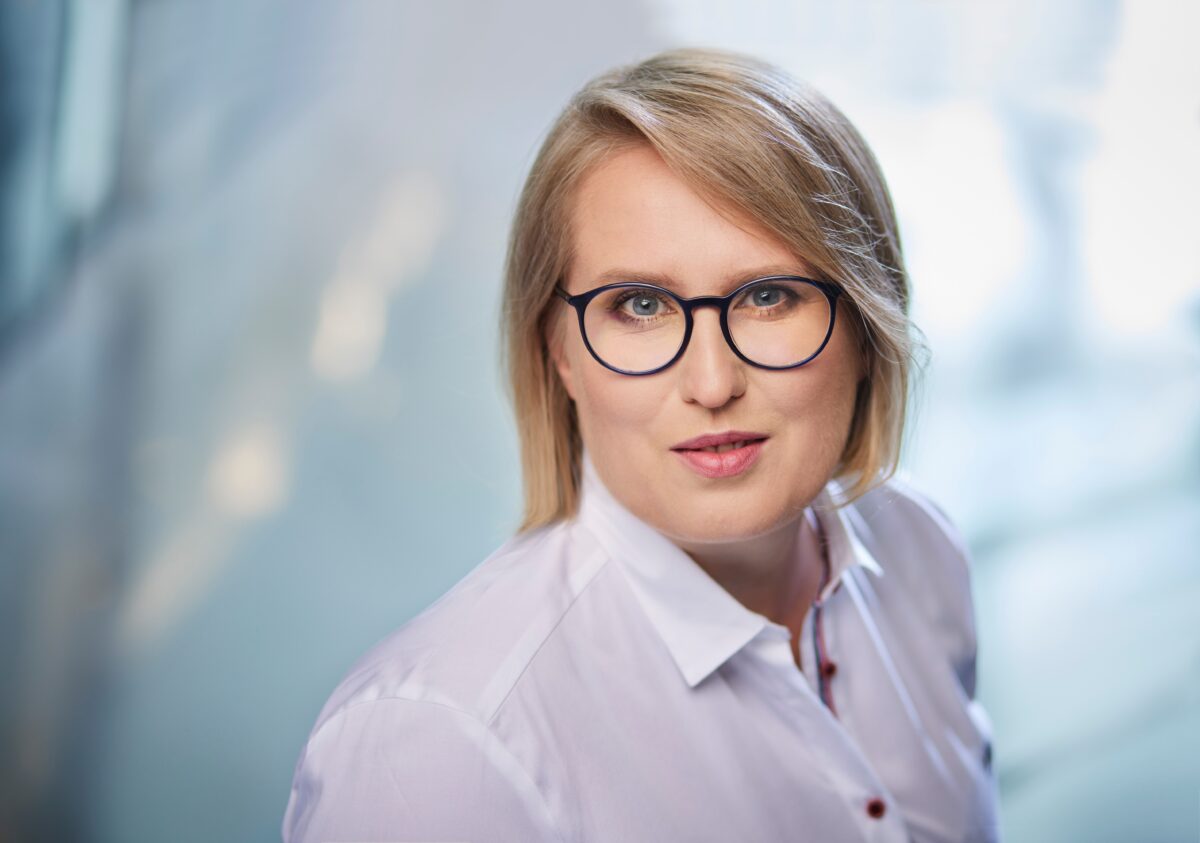





Throughout my career, I’ve encountered many layers of bias and scepticism – mostly around the fact that I’m a woman. A woman in energy. A woman in banking. A woman who understands financial language. A woman who walks into a room full of men and, unexpectedly, is the one who actually moves the discussion forward and closes the deal.
But bias is like background noise – you can either tune it out or let it drown your signal. I chose to tune it out.
Even when I sensed bias, I focused on doing my job. For me, the most effective way to challenge scepticism is by consistently demonstrating competence and giving people the space to realize, on their own, that their assumptions were misplaced.
In many ways, adults learn just like children – not from what you tell them, but from what you show them. We can talk about diversity and inclusion all day, but what truly changes mindsets is how we behave.
That Change in Mindset Has to Start from Within
For many years now, I’ve been strongly engaged in mentoring initiatives supporting women. What I see very clearly is that everything starts with mindset – how we, as women, look at reality and define our own potential.
Internal beliefs have a tremendous impact on the career path we build. You can change many things around you, but you have to start with yourself, and you have to be able to stand up for yourself.
Walking into a room where everyone expects you to fail is a tough test of courage, but it’s one worth taking – and no one will take it for you.
Fortunately, the industry itself has also been evolving.
A Sector in Transition – and Becoming More Inclusive
The energy sector is still a male-dominated industry, but it’s changing. Over the years, I have observed important shifts regarding gender inclusion in leadership. More women and people from various minority groups are being included in leadership roles.
In Central and Eastern Europe, this change has been particularly significant. Historically, the energy sector in the region was state-run, and many experienced professionals – mostly men – had spent most of their careers in a very different system.
The transition to a commercial and competitive market required a major shift in mindset in the entire industry. As the market and ways of thinking evolved rapidly, the door naturally opened to a broader range of people in leadership.
Today, Central and Eastern Europe is one of the most dynamic markets in the energy sector, especially in renewables. This transformation has gone hand in hand with a more inclusive approach.
And that inclusiveness is not just a cultural shift – it also has real business implications.
Diversity as a Driver of Better Decisions
Diversity and inclusion matter in every industry, but in energy they matter even more. The sector is strategic, and the decisions we make have wide-ranging impacts. Bringing different perspectives to the table leads to better, more socially acceptable solutions.
But diversity is also a real driver of growth. I see this clearly at R.Power. The company’s success isn’t just about capital or technology – it’s about having the right people and leaders who empower them. When a company embraces diversity and inclusion in practice, it creates real, tangible value.
This is particularly important in renewables. It’s still a relatively young sector, and the talent pool is not unlimited. Skills have to be a priority. Creating an inclusive environment is not separate from business performance – it is a condition for it.
That is why the real challenge begins at the executive level.
Translating Inclusion into Business Value
At the executive level, conversations are naturally centred around numbers. If we want leadership teams to truly engage with diversity and inclusion, we need to translate it into business language – into metrics, performance, risk, and long-term value.
At the same time, we cannot forget that behind every number there is a person. Financial logic and the human dimension must go hand in hand.
One of the biggest challenges is that DEI is often perceived as secondary – something “nice to have” rather than business-critical. In reality, it has a significant impact on results, even if that impact is not always immediately measurable.
Building Environments Where Talent Can Thrive
For organisations looking to retain and develop diverse talent, two priorities stand out: skills and regular pulse checks.
Companies need to invest in real development and create space for people to grow. But competence will not flourish in an unhealthy environment. Businesses have to regularly check the pulse of the organisation – understand the atmosphere, the culture, and the dynamics within teams.
Is this an environment where talent can actually emerge? And if not, why?
The “soft” dimension of leadership, while often underestimated, is actually one of the most strategic elements of business performance. Nothing grows in poor soil.
People deliver strong results only in an environment where they can use their full potential, where they don’t feel diminished, and where different perspectives are genuinely valued.
When Inclusion Becomes Real
I have several examples of how inclusive leadership has helped remove barriers in my own career, but one is particularly meaningful to me.
When I was being considered for an important industry recognition, the CEOs of the companies I have worked with – my current company, R.Power, and my previous company, BNP Paribas – immediately agreed to provide recommendations.
They spoke about my work and achievements in a very generous and thoughtful way, and their support truly mattered. Those recommendations contributed to me being included in the Forbes Top 25 Female Lawyers in Business list.
For me, that was a clear example of inclusive leadership in practice. It wasn’t about declarations – it was about someone willing to hold the ladder while I climbed.
Speaking the Language of the Industry
Of course, creating an inclusive environment is one thing. But every woman advancing in the energy sector has to put in the work herself as well.
The energy sector requires deep technical knowledge. Even as a lawyer, I quickly realized that to advise effectively, I needed to understand the technical context and use the right technical terms, bridging the gap between legal advice and business understanding.
For any woman entering the industry, overcoming these barriers means two things. First, challenging stereotypes – showing that women can be just as technically savvy and capable of understanding complex systems. Second, adapting to the reality of the industry by learning to speak the language used by people in the sector.
For me, this was essential. Without it, I wouldn’t be able to provide meaningful guidance.
Advice for the Next Generation
For young women entering the solar and renewable energy industry today, my advice is simple: become so good they can’t ignore you.
Believe in your abilities. Respect yourself. Do what you enjoy. And don’t let biases or other people’s assumptions shape the way you think. Just do your job.
At the end of the day, if you become a top specialist in your field, the company that doesn’t hire you is the one that will miss out.
Sabina is General Counsel at R.Power Group and a Board Member of R.Power Investment B.V., with over 20 years of experience leading legal departments in international organizations. She oversees legal teams across Europe and manages strategic projects in renewable energy (PV, wind, and BESS) as well as complex M&A transactions, ensuring that legal strategy supports dynamic growth and disciplined risk management. Previously, she led legal functions at major financial institutions, including BNP Paribas Poland, where she built a reputation for combining strong legal expertise with business pragmatism and effective leadership. She was recognized by Forbes as one of the “Top 25 Female Lawyers in Business” and actively engages in pro bono and mentoring initiatives supporting diversity and inclusion.
Interested in joining Sabina Blitek and other women industry leaders and experts at Women in Solar+ Europe? Find out more: www.wiseu.network
The views and opinions expressed in this article are the author’s own, and do not necessarily reflect those held by pv magazine.
This content is protected by copyright and may not be reused. If you want to cooperate with us and would like to reuse some of our content, please contact: editors@pv-magazine.com.

By submitting this form you agree to pv magazine using your data for the purposes of publishing your comment.
Your personal data will only be disclosed or otherwise transmitted to third parties for the purposes of spam filtering or if this is necessary for technical maintenance of the website. Any other transfer to third parties will not take place unless this is justified on the basis of applicable data protection regulations or if pv magazine is legally obliged to do so.
You may revoke this consent at any time with effect for the future, in which case your personal data will be deleted immediately. Otherwise, your data will be deleted if pv magazine has processed your request or the purpose of data storage is fulfilled.
Further information on data privacy can be found in our Data Protection Policy.