Emiliano Bellini

How airflow modifications in agrivoltaics affect crop yield, energy output
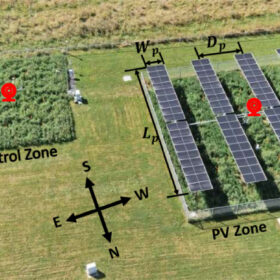
New research from France shows that PV panel height critically influences airflow and evapotranspiration in agrivoltaic systems, with panel heights of less than 3 m affecting crops through altered airflow. The scientists highlighted the need for site-specific measurements and computational fluid dynamics to accurately estimate water and energy exchanges beneath PV panels.

Morocco sets net‑metering tariffs for high, medium‑voltage systems
The Moroccan authorities have established new net‑metering tariffs for high, medium, and extra-high voltage systems from March 1, 2026, to February 28, 2027. The low-voltage tariff for residential PV will be set later, as the current regime mainly applies to industrial and commercial solar plants.
Cleaver-Brooks unveils air-to-water heat pump for hydronic heating
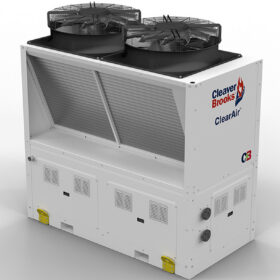
The ClearAir air-to-water heat pump is designed for hydronic heating in residential, commercial, and industrial buildings. Capable of generating hot water up to 80 C with integrated controls, it supports hybrid configurations across diverse applications.
Panasonic debuts fuel cell cogeneration system for PV‑integrated homes
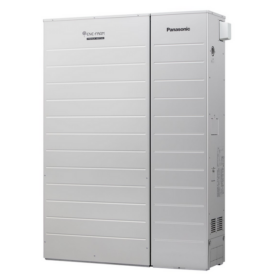
Panasonic has launched a new home fuel cell system for detached houses, designed to boost solar self-consumption through HEMS‑based smart scheduling. The unit generates electricity and heat from gas, supports demand response, and can supply emergency power during outages.
Samsung HVAC unveils inverter-driven residential heat pumps for cold climates
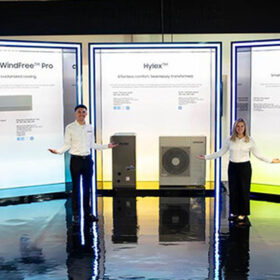
The US-based heating solutions provider said its Hylex inverter-driven heat pump offers 2–5 ton capacity, high efficiency, Wi-Fi control, and reliable cold-climate performance down to –25 C.
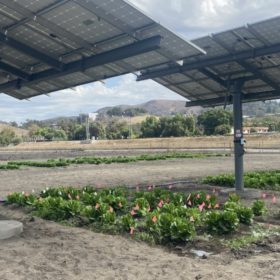
Agrivoltaics for regenerative agriculture
U.S. researchers are testing regenerative agrivoltaics at a farm in Southern California, combining solar panels with soil-restoring practices like composting, cover cropping, and no-till farming to enhance crop yields, soil health, and water-use efficiency. The pilot evaluates technical, ecological, and economic viability while exploring how this land-sharing approach can optimize food and energy production, reduce irrigation needs, and inform larger-scale deployment and policy frameworks.

New single-diode model tackles recombination losses in solar cells
UNSW researchers have developed an intrinsic-adjusted single-diode model that explicitly accounts for radiative and Auger recombination, improving I–V curve accuracy and reducing root mean square error by up to a factor of three. The model is claimed to better predict performance near open-circuit voltage and maximum power point.

AI can now predict solar cell efficiency from wafer quality
Korea University researchers have developed a machine-learning framework that predicts solar cell efficiency from wafer quality, enabling early wafer screening and optimized production paths. Using over 100,000 industrial data points, the approach combines predictive modeling, process optimization, and explainable AI to support photovoltaic manufacturing.
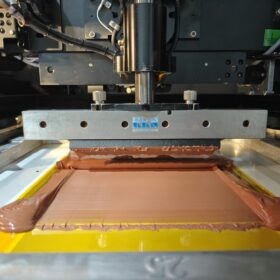
Bert Thin Films launches copper paste for backside solar cell metallization
The U.S. startup has introduced a screen-printable copper paste for backside solar cell metallization that can be fired in air and co-fired with standard silver frontside pastes using conventional manufacturing processes. Tested on TOPCon cells, the paste contributed to achieve a 25% efficiency and passed 2,000-hour damp heat testing.

Pay-as-you-go solar often underutilized in Sub-Saharan Africa
A study of 1,000 sub-Saharan African households using off-grid PAYG solar systems found that 77% reduce their electricity use after the first year, leading to underused, often oversized systems. This persistent decline is driven by behavioural changes as well as economic constraints and highlights the need for solar designs and pricing that better match actual household energy needs.
