Emiliano Bellini

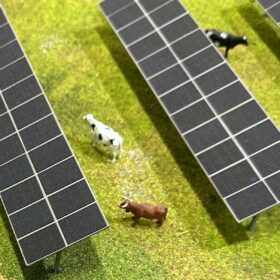
The impact of agrivoltaics on soil properties
New research shows how agrivoltaic systems can reshape soil by altering moisture, temperature, and microbial activity, creating heterogeneous zones under and between panels. Proper design and management can boost soil health and crop resilience, especially in degraded or arid regions, though long-term effects remain uncertain.
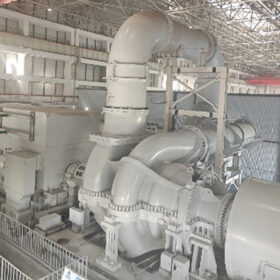
Chinese Academy of Sciences unveils 101 MW compressor for compressed air energy storage
The new compressor is described as the world’s most powerful single-unit compressed air energy storage (CAES) system, with a maximum discharge pressure of 10.1 MPa and an efficiency of 88.1%.

Optimal solar module row spacing for agrivoltaics across Europe
Researchers in Sweden developed a new methodology to optimize agrivoltaic systems across Europe, showing that row pitch, system type, and panel orientation must be tailored to local climate, crops, and regulatory constraints.
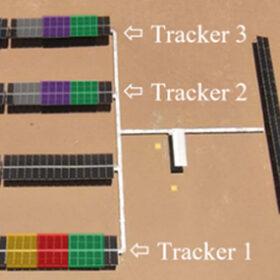
New algorithm reduces solar module temperature during clipping, curtailment
UNSW researchers have developed a thermal-aware tracking algorithm that reduces solar module temperatures and UV exposure during inverter clipping and curtailment, slowing degradation without lowering AC output. Tested in Chile’s Atacama Desert, the strategy was found to lower module temperatures by up to 7.7 C.
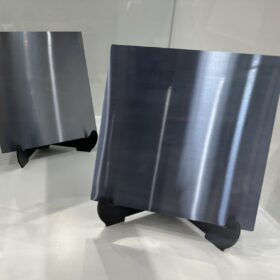
Longi builds 27.25%-efficient back-contact solar cells with high-resistivity wafers
High-resistivity silicon wafers offer superior efficiency potential but are highly sensitive to edge recombination and mechanical damage, limiting their commercial use compared to more robust standard wafers. Researchers from Longi and Sun Yat-sen University demonstrated that integrating in-situ edge passivation unlocks this potential, significantly boosting back-contact solar cell fill factor and efficiency.

The impact of land slope on agrivoltaics feasibility
Brazilian scientists have developed a slope-based framework for agrivoltaics, finding that sites below 15% gradient offer the best balance between agricultural suitability and technical feasibility. Their review of 30 studies shows that steeper terrain can host PV systems with adapted designs, land-use limits, erosion risks, and rising installation costs.
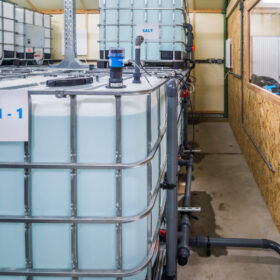
Long-duration storage as an antidote to grid congestion, renewables curtailment
RenewaFLEXNL, a three-year Dutch initiative led by TNO, aims to accelerate long‑duration energy storage (8–100 h) to reduce grid congestion and better integrate renewable energy. pv magazine spoke with the project coordinator, Iraxte Gonzalez Aparicio, about diverse storage technologies, real-world applications, regulatory guidance, and energy management system tools to support large-scale solar‑plus‑storage deployment in the Netherlands and beyond.

Agrivoltaics? Yes in my vineyard
Researchers in Spain surveyed 238 wine tourists in the Murcia region and found broad support for trellis-integrated agrivoltaics in vineyards, with 94% backing solar integration and most respondents seeing no landscape conflict.
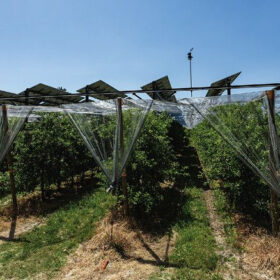
Scientists say land-preservation costs should be factored into agrivoltaics’ LCOE calculations
German researchers found that agrivoltaics costs far exceed agricultural benefits, raising doubts about subsidies and highlighting the need for more cost-competitive system designs.
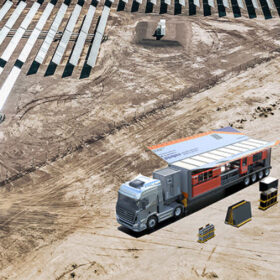
South Korea’s Won Kwang S&T launches mobile solar panel recycling solution
Won Kwang S&T has developed a mobile, on-site solar module recycling system for utility-scale PV plants. The SolreBorn unit can reportedly process up to 2.5 tonnes of modules per day and improve the economics of solar panel recycling through on-site dismantling and material recovery.
