Emiliano Bellini

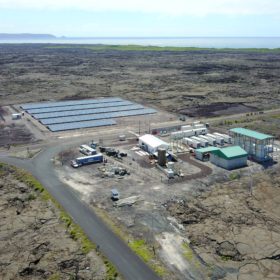
Tender launched for 14.8 MW/40.9 MWh of solar+storage in Ecuador
The Conolophus project, to be built on Santa Cruz Island in Galapagos National Park, will reduce regional diesel consumption.

Deploying rotating PV arrays on cooling towers
Swedish researchers have proposed the installation of rotating and revolving PV arrays on the cooling towers of thermal power plants. While such projects are ideal in nations with limited land, installation costs are also cheaper than for ground-mounted or rooftop PV plants due to proximity to the grid, the scientists claim.

China entering post-FIT era with solid prospects
The Chinese government is planning to phase out FITs and subsidies for all kinds of PV installation by the end of this year, according to the China Photovoltaic Industry Association. The trade body, however, expects strong recovery for domestic solar demand over the next five years, beginning in the second half of 2020.
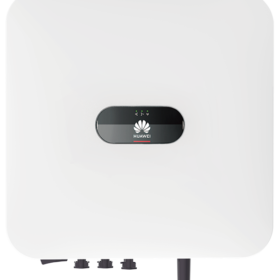
New residential inverter from Huawei
With power ranging from 2-6 kW in the seven-device series, the Sun2000-2-6KTL-L1 string inverters offer efficiencies of 98.2-98.4%. The 12kg products measure 365x365x156mm and feature two maximum power point tracking channels.
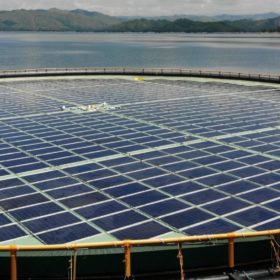
Albania’s first floating PV project now under construction
Norway’s Statkraft is building a 2 MW floating PV array, first announced a year and a half ago, at its 72 MW hydropower plant in Albania’s Elbasan region. Norwegian floating PV specialist Ocean Sun has agreed to supply tech for the €2 million plant.
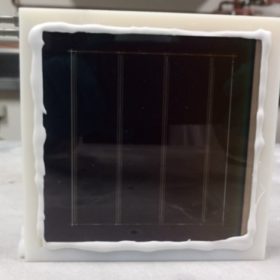
PV-electrochemical water-splitting for hydrogen production
A German research team has developed a new photovoltaic-electrochemical device for alkaline water electrolysis. The prototype has an initial solar‐to‐hydrogen efficiency of approximately 7.7%.
Global solar capacity may reach 1,448 GW in 2024
SolarPower Europe has predicted the volume of new PV capacity added this year will be 4% less than last year’s figure because of the Covid-19 crisis. At the end of 2019, the world had topped 630 GW of solar. For 2020, around 112 GW of new PV capacity is expected, and in 2021, newly installed capacity could be 149.9 GW if governments support renewables in their coronavirus economic recovery plans.
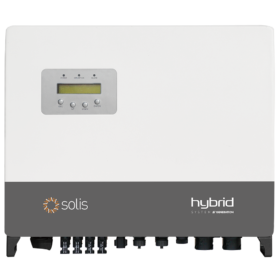
New residential battery inverter from Ginlong
The Chinese manufacturer has unveiled a hybrid product with a power range of 6.5-13 kW. The device has a maximum efficiency of 98.4%, according to Ginlong, and battery charging/discharging efficiency of 97.5%.

Romania allocates $59 million for solar rebates
The government will grant rebates to residential PV projects and may cover up to 90% of the costs of purchasing and deploying a rooftop array.

A look at China’s PV poverty alleviation policy
A global research team says that China’s PV poverty alleviation scheme has ramped up disposable income levels in the country’s poorest counties. The Chinese government aims to install more than 10 GW of PV, especially in the most impoverished parts of eastern China, to help 2 million people by the end of this year.
