Emiliano Bellini


Korean scientists build PV-powered supercapacitor with 35.5 Wh/kg energy density
Scientists in Korea have fabricated a solar-powered charging device that can reportedly achieve a power density of 2,555.6 W kg and an energy efficiency of 63%. The system uses nickel-based compounds to enhance the electrochemical performance of its electrodes.
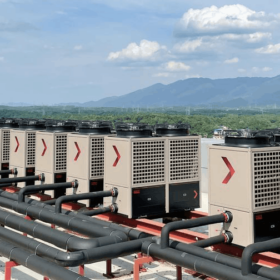
Phnix releases PV-ready heat pumps for commercial buildings
The Chinese manufacturer said the latest version of its Phnix HeatMaster heat pump series enables seamless integration with PV arrays. The systems have a coefficient of performance of up to 5 and can reach an outlet water temperature of 75 C.
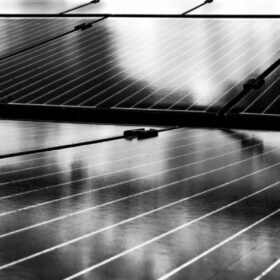
Novel MPPT tech based on salp swarm, hill climbing algorithms
Researchers have suggested to use a hybrid version of the so-called salp swarm algorithm (SSA) algorithm for maximum power point tracking in PV systems operating under highly fluctuating environmental conditions. The novel method also integrates the hill climbing algorithm, which simulates the process of climbing a mountain and reportedly helps find the best possible solution to a given problem.
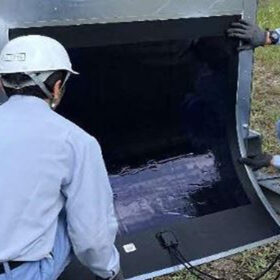
Japanese railway operator testing perovskite solar on noise barriers
Central Japan Railway Co. and Sekisui Chemical have revealed plans to deploy flexible perovskite-based PV systems along the Tokaido Shinkansen train line in Japan. They are using thin, lightweight, flexible film-type perovskite solar cells.
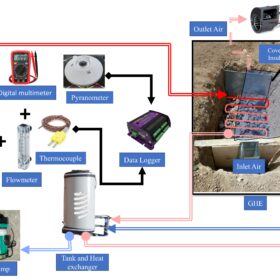
Storing photovoltaic-thermal energy with volcanic tuff stones
Scientists in China have used ground heat exchangers based on volcanic tuff stones to improve storage capabilities and efficiency of photovoltaic-thermal systems. Their experiments showed that the proposed combination effectively improves PV module cooling and thermal efficiency.
Australian researchers question lack of solar microgrids in remote areas
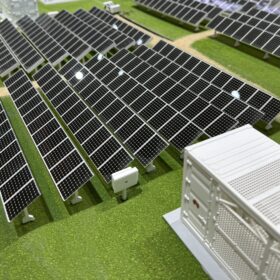
Researchers from four Australian universities have released a new paper questioning why solar microgrids are not the norm in remote central Australia.
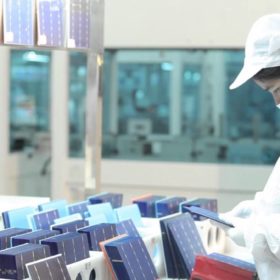
JinkoSolar claims 33.84% efficiency for perovskite-silicon tandem solar cell
The result was confirmed by the Shanghai Institute of Microsystem and Information Technology under the Chinese Academy of Sciences (CAS).

Chinese institutes create new metrological traceability system for silicon, perovskite solar cells
China’s Fujian Metrology Institute (FMI) and the National Photovoltaic Industry Measurement and Testing Center (NPVM) have created a metrological traceability system for both silicon and perovskite solar cells. The calibration system consists of a monochromatic light system, a bias light system, a 3D-motion measurement platform with temperature control, and an electrical measurement system.

Taiwan maintains solar FITs to support residential PV deployment
Taiwan’s Ministry of Economic Affairs (MoEA) says its feed-in tariff (FIT) for PV systems up to 10 kW in size will be maintained at TWD 5.7055 ($0.17)/kWh, with the aim of further supporting homeowners and small businesses adopting solar.

‘High electricity prices in California have nothing to do with renewables’
Stanford University professor Mark Z. Jacobson spoke to pv magazine about recent research work showing that California could easily rely on a wind-water-solar-dominated large grid. He says the state’s current electricity prices are high because of several reasons that have nothing to do with renewables. These include high fossil gas prices and the cost upgrading aging transmission and distribution lines, among others.
