
Greece faces rising renewables curtailment, driving solar-plus-storage
Greece’s solar producers are facing rising curtailments that are cutting revenues and driving interest in energy storage, even as regulatory and financing challenges slow deployment.

Greece to open applications for 130 MW agrivoltaics plan
Greece’s distribution grid operator will begin accepting applications for agrivoltaic systems on March 4, marking the first step in implementing a new law targeting 130 MW of capacity nationwide.

Greece to auction up to 200 MW of solar plus storage
Greece’s energy regulator has launched two new auctions under the Apollo Program, covering up to 200 MW of solar with storage and a separate 400 MW wind tender, marking the scheme’s first operational rollout since becoming law in 2024.
Cyprus installs 122 MW of solar capacity in 2025
Self-consumption PV projects accounted for most of the new solar capacity added in Cyprus last year, despite record levels of renewable energy curtailment, according to industry data.
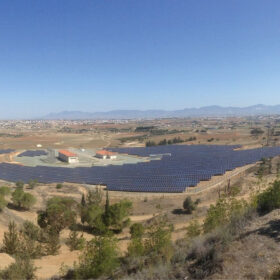
Cyprus solar curtailment hits 47% in 2025
Cyprus wasted nearly half of its distributed renewable generation in 2025, equivalent to 306 GWh, as grid constraints and lack of battery storage forced massive curtailments while solar capacity keeps growing.

Greece struggling to connect grid-scale battery storage projects
Greece has awarded permits for about 900 MW of standalone, front-of-the-meter battery storage through three auctions, but no projects have yet been connected to the grid.
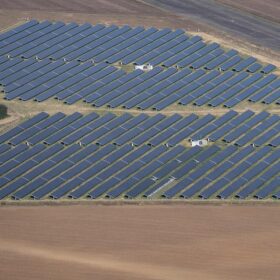
Greek solar producers petition EU over repowering and storage rules
Two complaints to the European Commission allege Greek repowering policies and high performance bonds for battery storage projects block upgrades, raise costs, and hinder energy transition, according to industry association Pospief.

Cyprus to replace net metering with new self-consumption regime
Cyprus will replace its current net metering and billing schemes with a new, market-based self-consumption model from January 2026, as the island’s electricity sector opens to competition.

Cyprus set to abandon net metering
The Cyprus Ministry of Energy, Commerce says it will accept applications for new net metering and net billing systems until Oct. 1, 2025. While the government has not announced its next steps, pv magazine has learned that it plans to phase out net metering.
Cyprus curtails more than half of renewables, including residential solar
Cyprus curtailed more than half of its potential renewable power in early 2025, including record residential solar cuts, as grid limits and a lack of storage strain its energy transition. Without swift investment in flexibility, analysts warn the country risks eroding public trust and delaying decarbonization.
