
Novel swapping technique for partially shaded PV systems
Researchers in India have developed an algorithm for quadrant swapping in PV arrays, enabling the creation of new quadrants containing either shaded or unshaded modules. The method was tested across ten shading scenarios with varying irradiation levels and demonstrated “superior” performance compared to conventional approaches.
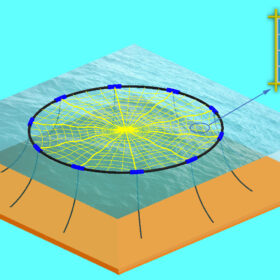
Floating photovoltaics based on spiderweb design
Scientists in the United Kingdom have developed a new web-inspired concept for floating PV farms, modeled after spider webs. The system is said to be particularly suitable for spiral and radial configurations, as well as for deployment between offshore wind farms.
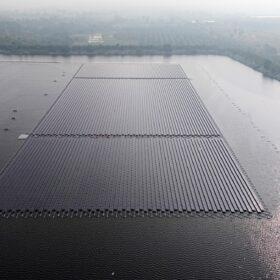
Ciel & Terre unveils new honeycomb structure for floating PV
The new Fusio floating structure features a triangular design and is said to be particularly suited to markets such as India and Southeast Asia. Tilt angles can be configured at either 5° or 12°.
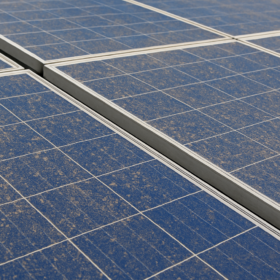
Low-cost, inverter-based dust monitoring method for rooftop solar
Researchers in China have developed a dust monitoring technique that relies solely on the existing hardware resources of inverters, without requiring extra sensors or meteorological data. Tests on real rooftop PV arrays demonstrated an accuracy exceeding 96%.”
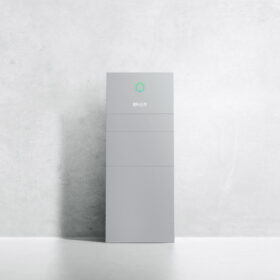
WHES releases all-in-one home storage system
The single-phase system delivers an output ranging from 3,680 W to 10,000 W and offers a storage capacity between 4.992 kWh and 19.968 kWh. The new product is based on LFP batteries.

New tech can tell if your EV will make it home
Researchers in California have created a new diagnostic metric that can reportedly predict if a battery can successfully power a specific task. The proposed model could be used in electric vehicles, unmanned aerial systems, and grid storage applications.

PV-powered sorption system for atmospheric water harvesting
Researchers in China have built an off-grid rapid-cycling sorption-based atmospheric water harvesting system. Powered by three PV modules, the system was tested with four condensation methods indoor and outdoor.
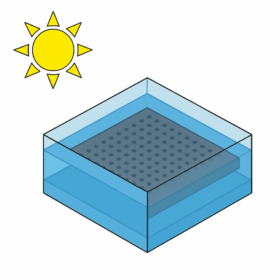
Cooling PV panels with stagnant water layer
Researchers have developed a stagnant water layer cooling concept and tested it using seawater, tap water, and desalinated water. The panel temperature decreased by up to 8.2 °C, while power output increased by approximately 28%.

Scientists develop new floating box array for offshore PV
Researchers have tested a 9 x 11 floating box array for offshore photovoltaics in a large wave flume, under regular and irregular wave sequences. They have placed wireless gyroscopes on three of the boxes, representing the front, middle, and rear positions.
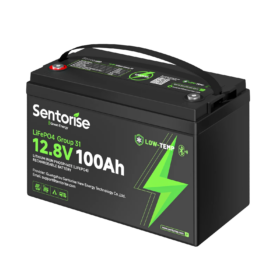
Sentorise releases 100 Ah battery for off-grid use
The Chinese storage system manufacturer said its 12.8 V product is designed for RV travelers, off-grid homeowners and marine users. It reportedly provides over 6,000 cycles at 90% depth-of-discharge.
