
Winaico to launch 515 W heterojunction solar module with 23.5% efficiency
Winaico says it will start selling 515 W solar modules with 23.2% efficiency in April 2025.

Canadian startup unveils substring inverter prototypes
Daanaa says its news Zodiac substring inverter delivers up to 42% more energy than a regular setup.

Strawberry fields forever, and with transparent PV
Scientists have grown strawberries under thin-film cadmium telluride panels with varying transparency. They found that 40% transparency maintained a greater than 80% yield of uncovered plants. If all strawberry farms in the world were converted to agrivoltaics, they would produce up to 173 TWh a year.

Exide releases mobile 200 kWh, 400 kWh storage solutions
The company said the new product uses up to four lithium iron phosphate (LFP) batteries. It is equipped with a single 180 kW or 2 x 90 kW chargers and multiple three-phase sockets.

New method to predict solar module lifespans under sand erosion
A team of researchers in Algeria has designed a new testbed and a novel acceleration law that accounts for both wind speed and sand density. The new methodology was tested on four PV modules and showed lifespans of up to 47 years in terms of sand impact.

Lennox debuts residential heat pump for cold climates
The company says that its new SL22KLV heat pump system can supply heat in temperatures as low as -28.9 C. It uses R-454B as the refrigerant and has a size ranging from 2 tons to 5 tons.
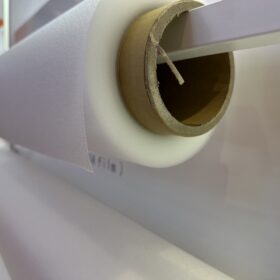
New research shows correlation between PV module electrode corrosion and damp heat test
A research group in Japan identified a correlation between damp heat test of 1,000 hours to 3–6 years of field exposure in humid areas and changes in acetic acid concentration in photovoltaic modules. Their analysis also showed that an acetic acid concentration over 10,000 μg/g can be critical.

Could German PV energy communities participate in the balancing market?
The RWTH Aachen University has simulated 27 scenarios of energy communities participating in the balancing market in Germany and has found that the business model behind an energy community is only feasible if battery storage is available.
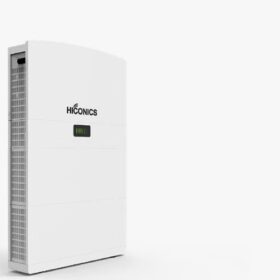
Midea Hiconics releases 30.6 kWh storage system for residential PV
The all-in-one single-phase system can take up to 3,750 W of PV input. It can be stacked with two to six batteries.

New study shows reducing number of solar modules per string reduces risk of hotspots
Scientists in Indonesia have investigated early operational defects in a 24.9 MW solar PV system in Sumatra and have identified hotspot formation as the dominant defect. They also detected 282 cases of glass cracking, 350 cases of junction box failures and shading effects linked to module defects.
