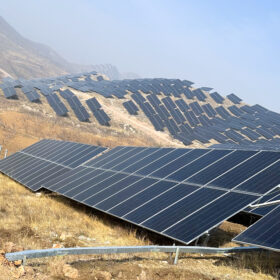
Mibet releases mounting system for utility-scale PV
The Chinese company said its new GT1 product is made out of hot-dip galvanized Q235B steel and can withstand wind speeds of up to 60m/s.
New soiling detection method based on drones, AI, image processing
Developed by scientists in China, the proposed approach uses mathematical morphologies for image processing, such as image enhancement, sharpening, filtering, and closing operations. It also uses image histogram equalization and edge detection, among other methods, to find the soiled spot.
Israel’s N2OFF enters solar business
Agri-food tech specialist N2OFF says it has entered the PV business by lending €375,000 ($407,000) to Israeli PV developer Solterra Renewable Energy. The loan is part of a larger €500,000 agreement, with the remaining €125,000 to come from other parties.
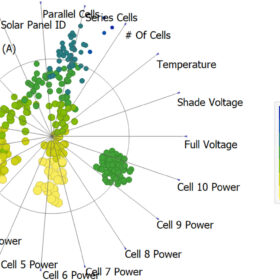
k-Nearest Neighbors algorithm for PV power forecasting
Scientists in Iraq used a k-Nearest Neighbors algorithm to evaluate the operational status of PV modules under various conditions, including partial shading, open circuit, and short circuit scenarios. They found that the overall performance of the model in predicting power output was “notably accurate.”
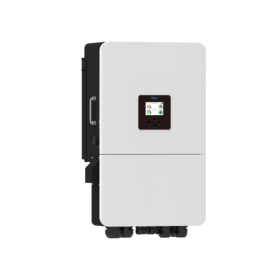
Deye releases residential hybrid inverter
Chinese manufacturer Deye says its new three-phase residential hybrid inverter system has a rated output power ranging from 14 kW to 20 kW.
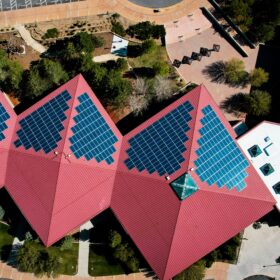
Residential PV power forecasting method based uniquely on direct radiation
Researchers in Spain have created a novel PV forecasting method that uses only direct radiation as a parameter. They found it to be “comparable, if not superior” to four established forecasting techniques. The method could help homeowners with PV systems decide when to use electricity-intensive appliances and cleaning systems.

EDF wins Israeli PV tender with bid of $0.019/kWh
EDF has won an Israeli solar tender with a bid of $0.019/kWh, securing a 100 MW project to sell energy at a record price of ILS 0.07 ($0.02)/kWh.
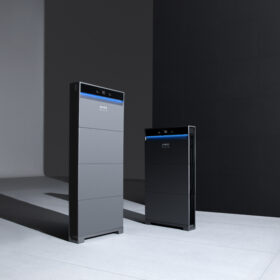
Anker launches new all-in-one home storage solution
Anker has developed a new all-in-one home storage solution with up to 30 kWh of capacity, available in single-phase and three-phase configurations.
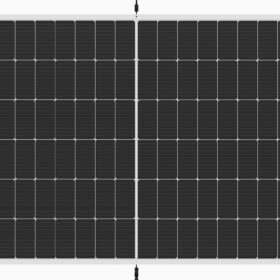
GoodWe unveils double-glass TOPCon bifacial solar modules
GoodWe has developed new double-glass tunnel oxide passivated contact (TOPCon) bifacial solar modules for its Polaris series, available in 525 W and 580 W variants.

Photovoltaics for cold climate data centers
A Japanese-Finnish research group has assessed the levelized cost of energy of solar power plants supplying electricity to data centers in cold climates and has found that PV electricity could be considerably cheaper than grid electricity, even if used with battery storage.
