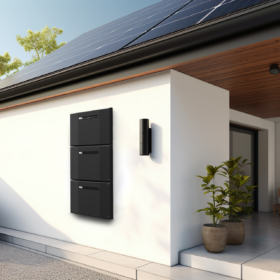
BMZ Group releases lithium iron phosphate battery for residential PV
The German manufacturer said PV system owners can connect up to four units in parallel for a storage capacity of up to 106.8 kWh. The battery reportedly has a lifecycle of more than 6,000 cycles and comes with a 10-year warranty.
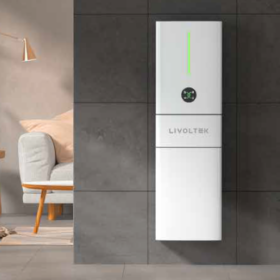
Livoltek releases all-in-one storage system for residential applications
Livoltek has developed an all-in-one storage system for residential applications, featuring a storage capacity of up to 25 kWh and compatibility with five different inverter models, as well as the option to integrate with electric-vehicle (EV) chargers.

K2 Systems launches mounting systems for facades
Germany’s K2 Systems has developed mounting systems that are specifically designed for facades, including walls made from masonry, concrete, sandwiched panels, trapezoidal metal sheets, and corrugated sheets.
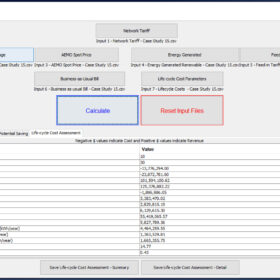
Open-source software helps stakeholders make cost-effective renewable energy investments
Conceived by a group of scientists in Australia, the novel online tool can be modified for different regulatory environments. The program’s user interface asks for seven input files with a resolution of 30 minutes.
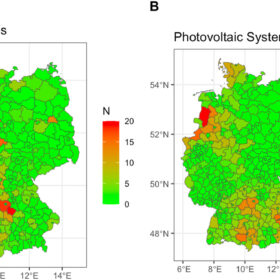
Legitimation, competition drive citizen-led PV initiatives in Germany
Scientists have analyzed what factors affect the emergence of solar associations and cooperatives in Germany. Applying the organizational ecology theory, they found a collective solar initiative in a given district may likely lead to creation of similar experiences in the same district.
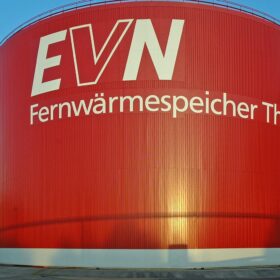
Thermoelectric heat-pump boosters can increase supply-water temperature in district heating by 10 C
A Slovenian research group has proposed using a heat pump booster instead of vapor compression technologies in low-temperature district-heating substations and has found that this combination may raise the supply-water temperature from around 32 C to 42 C. In the proposed system configuration ten single-stage Peltier modules were used, each with a maximum cooling power of 165 W and a maximum electric power of 289.2 W.
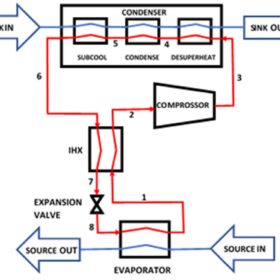
Testing zeotropic fluids in high-temperature heat pumps
A German-Nigerian research group simulated the usage of mixtures of zeotropic fluids with varying boiling or condensing temperatures in industrial heat pumps. The best results were obtained with a mixture of cyclohexane and cyclopropane.
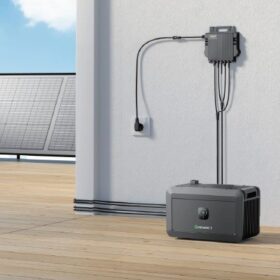
Growatt launches new balcony storage solution
The new product combines the NEO 800TL-X Microinverter and the NOAH 2000 Battery. Up to four batteries can be stacked, for up to 8,192 Wh of storage capacity.
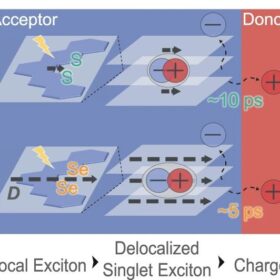
Non-fullerene organic solar cell with selenium acceptor achieves 19% efficiency
Researchers in China have designed an organic solar cell the uses an acceptor based on selenium as an alternative to commonly utilized non-fullerene acceptors. The new acceptor enabled the cell to have reduced non-radiative recombination loss and improved dielectric constant.
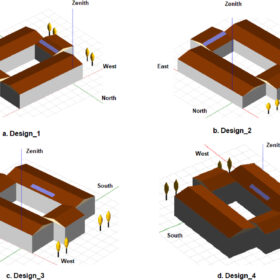
Improving performance ratio of PV systems via shading effect
Researchers in Indonesia have investigated how shading effects may influence the performance ratio of a PV system. Their analysis also considered payback period and return on investment.
