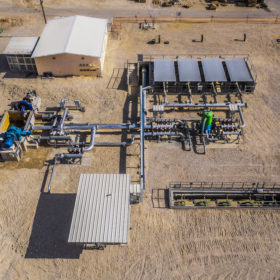
Cash flow analysis shows adiabatic compressed air storage is viable for 10–100 h applications
Scientists in the United Kingdom have compiled a new database of adiabatic compressed air energy storage projects. Using this data, they were able to determine the experience rate and identify the conditions under which the technology would be economically viable. According to their findings, costs have declined at a 15% learning rate since 2013.
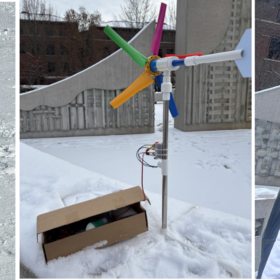
Sodium-ion battery storage for ultra-low temperatures
U.S. researchers have developed a sodium-ion pouch cell that operates reliably at temperatures as low as –100 C. The battery was tested with simulated and real renewable energy sources, including wind and solar, and maintained stable performance in both laboratory and field conditions.

Reducing PV module temperature with twisted tape
Researchers in Iran have investigated how twisted tape in water-cooled channels can enhance heat transfer in solar modules. They have used a computer simulation to analyze the new approach with different parameters and have found the panels’ ectrical efficiency increased by up to 11.84%.

S-5! launches new clamp for solar carports
The US mounting system provider said its new product is designed to fit both Cee and Zee purlin-framed structures. It features a bottom-oriented setscrew.
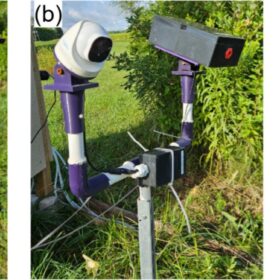
Open-access, modular monitoring platform for multi-year outdoor PV testing
A team of researchers in Canada has developed the Jericho Open Resistive Data Logger—an open-access photovoltaic (PV) monitoring platform that integrates data acquisition and processing hardware, a software framework, and a comprehensive sensor array. Designed primarily for agrivoltaic applications, the system has a total estimated cost of around $2,000.
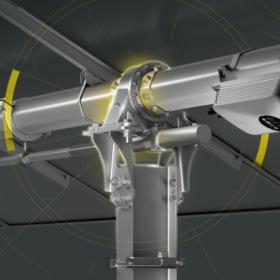
Antaisolar launches single-axis tracker
The Chinese company says its AT-spark has a length of up to 143 m and a rotation range of 60°. It can accommodate up to 120 solar modules.
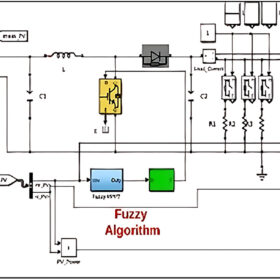
Optimizing PV system tilt angle, MPPT using fuzzy logic controller
Researchers in the Middle East have developed a fuzzy logic controller that simultaneously optimizes the tilt angle of PV systems and performs maximum power point tracking (MPPT). Year-long simulations indicate that the proposed approach increases power generation by approximately 20%.
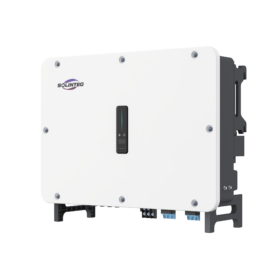
Solinteg unveils hybrid inverter series for C&I applications
The Chinese manufacturer said the product line includes five models with outputs ranging from 25 kW to 50 kW, supporting charge and discharge currents of up to 150 A.

GoodWe releases new residential all-in-one storage solution
The Chinese company says that its new ESA series is available with a hybrid inverter ranging from 3 kW to 10 kW and storage capacities of 5 kWh to 48 kWh. The IP66-rated product supports an MPPT current of up to 20 A on the PV side and allows 200% PV oversizing, according to the manufacturer.

Increasing PVT-assisted heat pump efficiency with liquid overfeed design
Researchers in China developed a large-scale PV-thermal heat pump system using a liquid overfeed method that reportedly improves both thermal and electrical efficiency. Field tests showed up to a 4.81% boost in power generation and significantly reduced pressure losses compared to conventional systems.
