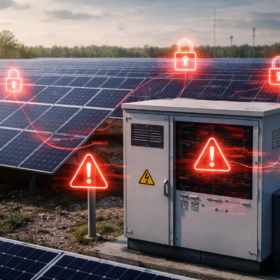
Managing cyber risks in the era of decentralized energy
The move toward decentralized energy resources offers resilience and flexibility in power generation, but it also introduces new complexities that demand proactive security measures.

U.S.-Israeli conflict with Iran tests solar supply
The U.S.-Israeli conflict with Iran is unlikely to materially affect solar manufacturing projects in the Middle East for now, as most of these investments remain at an early stage. OPIS analyst Brian Ng sees the most immediate risk in logistics. If disruptions persist, shipments of solar products into the region could be delayed and export pricing may turn volatile.

‘I joined the management team the day after returning from maternity leave’
This week Women in Solar+ Europe gives voice to Ilse Cappelle, Head of Marketing & E-commerce at Netherlands’ Libra Energy. She explains how returning from maternity leave directly into a leadership role showed her the company’s strong support for career growth and work-life balance.

Chinese module trading slows after export tax rebate cancellation
In a new weekly update for pv magazine, OPIS, a Dow Jones company, provides a quick look at the main price trends in the global PV industry.

Solar PV, geothermal hybrid systems are more than niche solutions
Solar energy, driven by excellent resource conditions and rapidly improving economic attractiveness, is expected to emerge as a bulk energy supplier in future energy systems. The self-limiting effects of solar power can be circumvented through solar-hybrid solutions, such as PV-geothermal hybrid configurations.
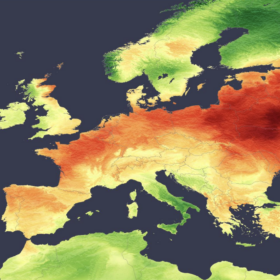
Dust, storms drag southern European solar as central regions outperform in March
In a new weekly update for pv magazine, Solcast, a DNV company, reports that Saharan dust caused widespread panel soiling in southern Europe in early May, while much of central and eastern Europe benefitted from above-average solar resources. Favourable conditions broke down later in the month as cold polar air and a powerful storm system brought cloud, snow and damaging winds to many parts of the continent.

UK opens door to plug-in solar boom
In its first monthly column for pv magazine, experts from UK-based consultancy Ricardo, part of the WSP Group, explain how UK will soon allow low-cost plug-in solar panels under 800 W to be installed without a qualified electrician, making home solar more affordable and accessible. These portable systems, expected on sale by summer 2026, could significantly boost household solar adoption while complementing the country’s wider renewable energy growth.
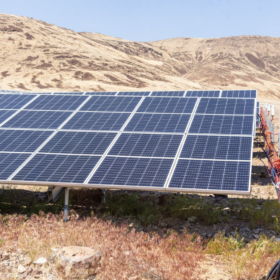
Inverter-based resource performance history leads to US regulatory change
Three new NERC standards — PRC-028, 029 and 030 — are designed to improve grid reliability

US solar module prices face upward pressure
Median solar module pricing in the United States reached $0.28 per watt as the market adjusted to intensified trade enforcement and new Foreign Entity of Concern compliance requirements, according to the Q1 2026 Quarterly Pricing & Domestic Content Report from Anza.
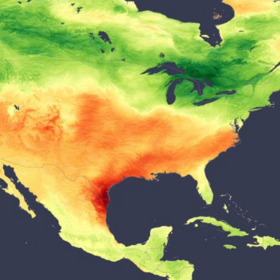
Heat dome and high pressure boost southern US solar as polar vortex clouds the north
In a new weekly update for pv magazine, Solcast, a DNV company, reports that last month North America saw a stark solar divide, with southern regions like northeastern Mexico, southeastern Texas, and much of California experiencing 20–25% above-average irradiance, while Canada, the Great Lakes, and the northeastern U.S. faced persistent cloudiness and below-normal solar conditions. This contrast was driven by high-pressure systems and a southwestern heat dome in the south versus a polar vortex bringing cold air and storms to the north.
