Patrick Jowett

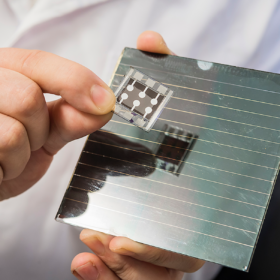
Perovskite solar cell achieves higher stability with new tin oxide layer
Using atomic layer deposition, a research team from the City University of Hong Kong has created an an oxygen-deficient tin oxide layer to replace the more common fullerene electron transport layer in perovskite solar cells. The result is a 25%-efficient device that is able to retain around 95% of its efficiency after 2,000 h.
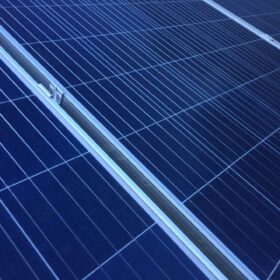
Kosovo shares results of solar subsidy scheme
Kosovo’s Ministry of Economy says two new schemes, offering subsidies for solar system installations to households and small- and medium-sized enterprises, have received more than 500 applications combined.

Micronesian utility seeking bids for 79 kW of solar minigrids, battery storage
Yap State Public Service Corp. is seeking bids to supply solar minigrids with battery energy storage systems (BESS), totaling 79 kW, for Yap Island in the Federated States of Micronesia. Applications are open until Jan. 28, 2025.

Vietnam approves price framework for renewable imports from Laos
The Vietnamese authorities have approved a new price framework for importing renewable energy from Laos, with base import prices for wind and hydropower set to take effect at the end of 2025.

Canada refinances funding stream for renewables, grid modernization tech
The Canadian government has put another CAD 500 million ($363.1 million) in its funding stream to finance renewable energy and grid modernization technologies. Canadian utilities, system operators, and industry organizations are eligible to apply for support for projects that help strengthen the grid.
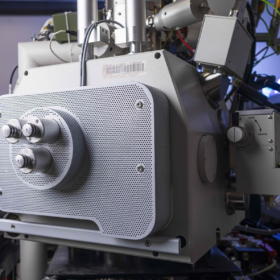
Researchers capture first-ever images of electric charges across semiconductor materials within a solar cell
A team from the University of California Santa Barbara used ultrafast electron microscopy to record photocarriers as they diffuse across a silicon and germanium heterojunction. It is the first time the movement, which lasts picoseconds, has been captured as a moving visual.

IEA-PVPS report shows record year for US solar in 2023
The latest report from the International Energy Agency (IEA) Photovoltaic Power Systems Programme (PVPS) says solar records were broken across the United States in 2023, as international trade issues decreased and financial certainty increased, driven by the implementation of the US Inflation Reduction Act.

Africa needs regional strategy for PV manufacturing
A new policy paper from the African Policy Research Institute (APRI) recommends that Africa adopt a regionalized PV strategy to successfully integrate into the global solar value chain. It warns that without a coordinated approach, individual countries are unlikely to integrate into the global market.
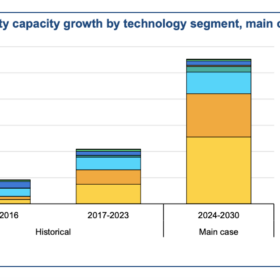
IEA forecasts over 4,000 GW of new solar by 2030
The International Energy Agency says renewables are on course to meet almost half of global electricity demand by 2030, with solar accounting for 80% of the growth in capacity.

Construction begins on South Africa’s first city-run solar plant
The city of Cape Town, South Africa, has started building a 7 MW solar plant that it will own and operate. It has also launched a tender for a 5 MW/8 MWh battery energy storage system to be built at the same site.
