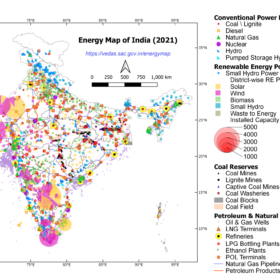
NITI Aayog releases geospatial energy map of India
NITI Aayog has released a new map that attempts to identify all primary and secondary sources of energy and their transport/transmission networks to provide a comprehensive view of energy production and distribution in India.
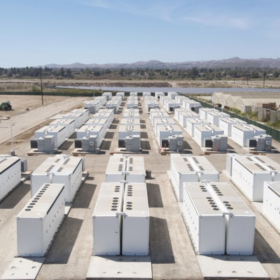
SECI invites proposals for 1 GWh of battery energy storage systems
Solar Energy Corp. of India has released draft guidelines for a tender to set up standalone battery energy storage systems in India.

Reliance Industries to invest $29 million in Nexwafe
Reliance New Energy Solar, a subsidiary of Reliance Industries led by billionaire Mukesh Ambani, which is planning a huge manufacturing venture in Gujarat, India, has led a series C financing round in German wafer manufacturer NexWafe with an investment of EUR 25 million ($29 million). This marks the third major investment in renewables announced by the Indian multinational this week.

Danish electrolyzer firm Stiesdal next in Reliance’s new energy plans
Reliance New Energy Solar has signed an agreement with Danish firm Stiesdal A/S to develop and manufacture Stiesdal HydroGen electrolyzers for green hydrogen production in India.
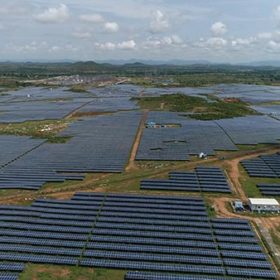
India: Tata Power secures 100 MW distributed solar order from EESL
Tata Power Solar has landed the engineering, procurement, and construction work for 100 MW of distributed solar capacity in India’s Maharashtra. The awarded capacity includes multiple ground-mounted projects.
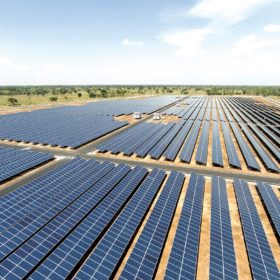
Reliance Industries’ new energy arm to acquire 40% stake in Sterling and Wilson Solar
The acquisition gives Reliance New Energy Solar access to Sterling and Wilson Solar’s PV plant engineering and project management skills as it aspires to become a global leader in green energy based on the latest and most cost-competitive technologies and development capabilities.
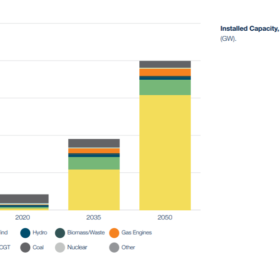
Renewables system with 76% share of PV could halve Indian electricity costs by 2050
A new study by Lappeenranta-Lahti University of Technology and Wärtsilä explores the feasibility of a net-zero power system in India by 2050. It shows that an all-renewables system paired with flexible generation tech could improve the affordability of electricity, while ensuring the reliability of system operations.
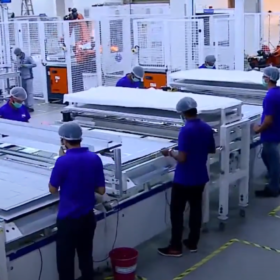
Emmvee sets up 3 GW solar cell and module factory in India
Planned to be located in Dobaspet, Karnataka, the manufacturing facility will be Emmvee’s second solar factory in the Indian State.
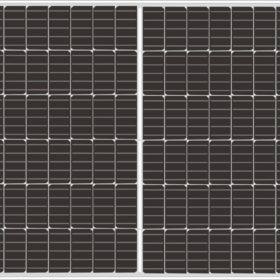
Indian manufacturer unveils 375-410 W half-cut modules with 20.4% efficiency
Pixon Energy has launched mono PERC half-cut-cell modules with output capacities ranging from 375 Wp to 410 Wp. The five-busbar modules can be used in all types of PV installations, including off-grid, residential, commercial and industrial, and utility-scale projects.
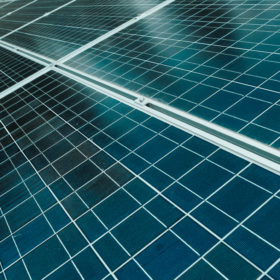
Rate of Indian commercial and industrial solar installation fell 34% in the second quarter
The nation’s C&I solar segment saw just 332 MW of generation capacity added in April-to-June, compared to 501 MW in the first three months of the year, as lockdowns in multiple states slowed installation activity.
