
Enabling aluminum in batteries
Scientists in South Korea and the UK demonstrated a new cathode material for an aluminum-ion battery, which achieved impressive results in both specific capacity and cycle life. The material allows researchers to better take advantage of aluminum’s energy storage characteristics, and produce batteries with much higher capacity.
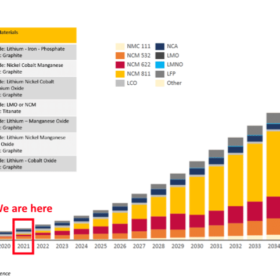
World’s first battery-grade graphite producer outside of China
Australia’s Renascor Resources has confirmed it has raised AUD 15 million ($11.6 million) to fund its Siviour battery anode material project up to the construction phase. The project will be the world’s first integrated mine and purified spherical graphite operation outside of China.
U.K. takes another tiny step to smart energy system
Energy regulator Ofgem has announced it aims to bring in market-wide half-hourly settlement across the retail electricity market – from October 2025. The long timescale reflects a sluggish attitude at an inconsistent regulator which appears to be planning an unpredictable route to net zero.
Add electric vehicles, not bulk transmission, for a low-cost, clean grid: UC Berkeley study
A 90% clean grid with a transition to EVs would achieve lower electricity costs than one without, the study shows. Transmission investments would mainly be spur lines to new renewable generation.
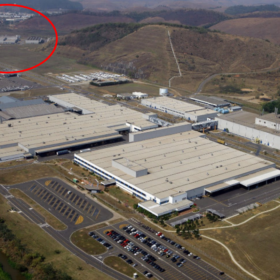
British company to produce solid-state lithium-sulfur products this year
Oxfordshire-based Oxis Energy says it will produce the less flammable devices sought by the aviation industry using the same manufacturing processes as those used to make lithium-ion and conventional-lithium-sulfur products.

GM and LG Energy plan a $2.3 billion electric vehicle battery plant
The automaker’s future Ultium-powered EVs are designed for Level 2 and DC fast charging. Most will have 400V battery packs and up to 200 kW fast charging capability.
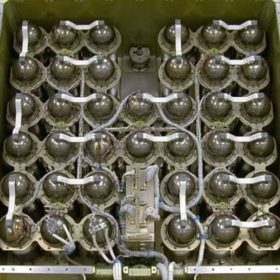
US start-up secures distribution agreement for nickel-hydrogen battery technology
EnerVenue signed its first major distribution agreement with Hong Kong’s Towngas. The deal will pilot the company’s nickel-hydrogen battery technology and serve as an audition for future deals to come.
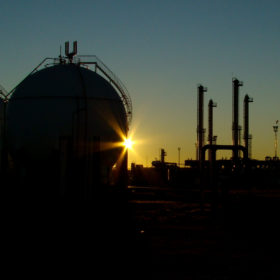
Italy should embrace solar, not gas to hit raised climate ambition
Instead of splurging €11 billion of EU cash on uneconomic new generation capacity, the Italian authorities–and electricity bill payers–would be better served investing in a mix of current clean power technologies which would include almost 17 GW more solar capacity.
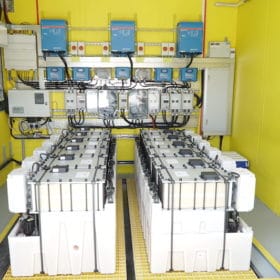
Australian vanadium companies unveil new flow-battery strategies
Australian Vanadium filed a patent application this week for its vanadium processing route, while rival TNG signed a deal to commercialize vanadium redox flow batteries.
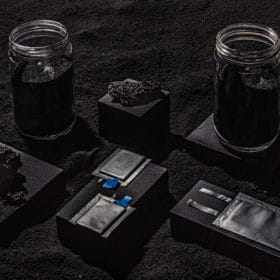
Silicon for batteries moves to commercial production
U.S. company Group14 Technologies today announced the launch of a factory capable of producing 120 tons per year of its innovative silicon-carbon-based anode material for lithium-ion batteries. The factory is located at Group14’s headquarters in Woodinville, Washington and is the first of several planned by the company.
