
UK government backs national battery facility to tune of £80m
Partnership between Coventry City Council, University of Warwick’s WMG and Warwickshire Local Enterprise Partnership to receive sizable investment from British government to build and maintain world-leading storage research and production facility.
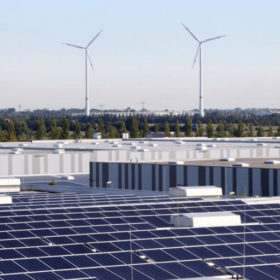
Germany develops hybrid compensation plant system combined with storage, converter
In the system, the research team combined energy storage with a very powerful converter that can influence the signal flow in the power grid. This should help reduce the number of individual systems that are used for system services and expand the use of storage.
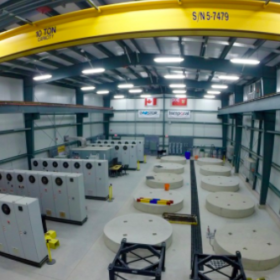
SUSI to provide $94.3 million to back Canadian storage projects
A fund managed by Swiss investment firm SUSI Partners AG has agreed to provide C$120 million (US$94.3 million) of financing to a unit of energy storage developer NRStor for lithium-ion storage projects in Canada.
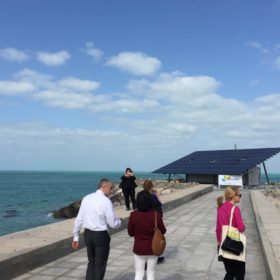
French forces unite to develop solar PV desalination plants
Two French companies have partnered to develop projects that combine renewable energy generation with water desalination. This is an area the solar sector is targeting specifically for the developing world, due to its off-grid compatibility.
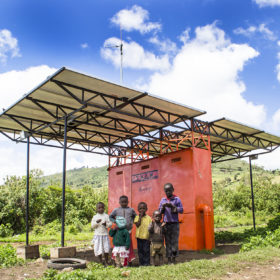
Potential for PV to snap significant share of $40 billion distributed energy industry in frontier markets – BNEF
There is potential for solar PV and storage to snap a significant share of the distributed energy industry in frontier markets, says BNEF. Both telecoms and agriculture present interesting opportunities; SE Asia is an emerging micro grid hotspot; pay-as-you-go solar is seeing strong growth; and China is recording substantial business.
Global storage market to double six times by 2030, BNEF reports
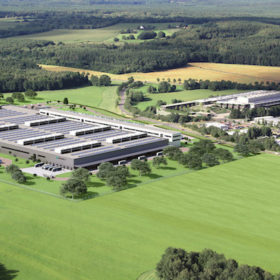
Global cumulative storage deployment will double six times between 2017 and 2030 to reach 125 GW/305 GWh, with as much as $103 billion pouring into the sector, finds new report by Bloomberg New Energy Finance.
Niger gets its first solar container
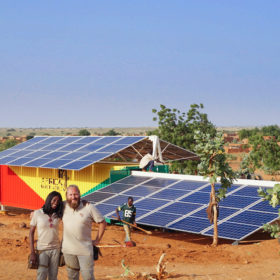
Africa GreenTec, alongside the German Investment and Development Company (DEG) and the International Climate Initiative, have installed a solar-plus-storage container in the Tahoua region.
Sky Solar buys 24 MW of DGPV projects in Chile
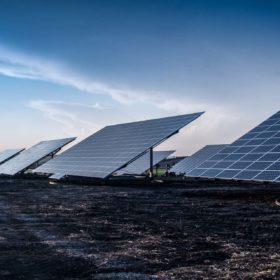
All of the projects are located in the O’Higgins Region and are being developed under the country’s PMGD Program for distributed generation.
Australian government to back blockchain PV, water project
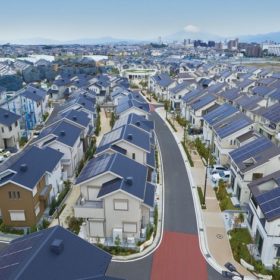
The Australian government has agreed to provide AU$2.57 million (US$1.9 million) to support a two-year pilot project that will use blockchain technology to pair utility-scale and commercial rooftop PV with a battery, electric vehicle charging stations and water treatment systems in Western Australia.
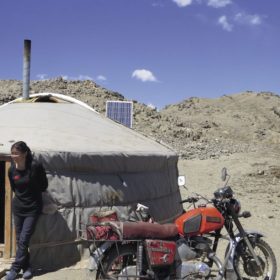
Switching to solar can boost education, prosperity for developing world, study finds
Research from the Overseas Development Institute estimates that children in developing world can gain 15 minutes extra study time a day if their homes switch from fossil fuel to solar, while households can enjoy savings of $10 per month.
