
Battery manufacturing ramps up in the U.S.
Passage of the Inflation Reduction Act of 2022 has resulted in numerous battery manufacturers announcing plans to begin production in the United States, supporting the transition to clean energy as well as clean transportation.
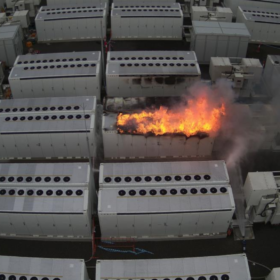
Fire at PG&E’s Tesla battery in California is now under control
A Tesla Megapack battery caught fire at PG&E’s Elkhorn large-scale battery storage facility in Monterey County, California, in the early hours of September 21. The fire was brought fully under control by the late afternoon, and its cause is under investigation.

HDF Energy wants to build utility scale solar hydrogen project in Namibia
The project consists of an 85 MW solar park and a green hydrogen production unit. The facility should begin commercial operations in 2024.
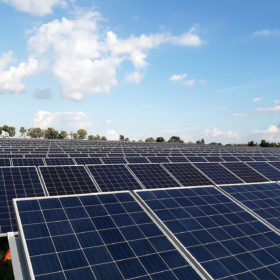
KKR, Hero Group to invest $450 million in Hero Future Energies
The investment will support Hero Future Energies in expanding its renewable energy capacity. The Indian independent power producer has a diversified portfolio of 1.6 GW of operating solar and wind projects.
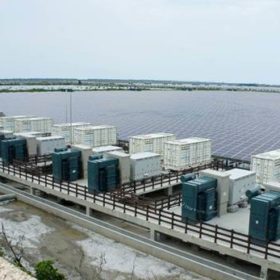
Taiwan’s largest battery comes online
United Renewable Energy has energized a 15 MW/15 MWh storage system connected to a 150 MW solar park located near Tainan.
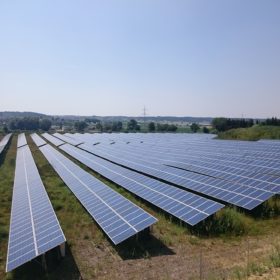
In Asean nations it’s all about the solar
Indonesia will have to get to work installing more than 24 GW of solar this year – and every year – if the region is to achieve the 2.1 TW to 2.4 TW of photovoltaics Irena has estimated it will require to achieve a net zero carbon energy system by 2050.
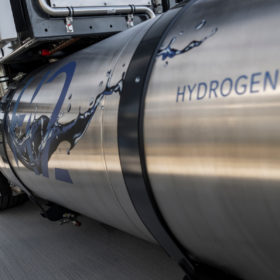
Hydrogen to play limited role in building energy supply
How much hydrogen is actually needed? Several German research institutes have examined 40 energy scenarios for hydrogen ramp-up and found that 15 million GWh of hydrogen will be needed worldwide by 2050.
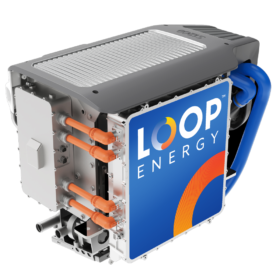
The Hydrogen Stream: Canadian startup unveils 120 kW fuel cell system
In other news, Alstom tested its hydrogen train for long-distance transportation and the IEA released a report suggesting that hydrogen development may require an annual investment of around $60-130 billion through 2030.
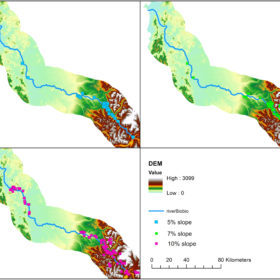
Pumped hydro storage for rivers, coastal lines
Scientists in Germany have developed a new methodology to identify suitable areas for pumped hydro storage projects close to rivers or shorelines. Their new method considers parameters such as the minimum required flat area for the reservoir, the allowable slope of the terrain, the minimum head, and minimum required head to distance ratio between two reservoirs.
Canadian pension fund invests in Mahindra’s renewables arm
Mahindra Group has agreed to sell a 30% equity stake in Mahindra Susten to the Ontario Teachers’ Pension Plan for around $300 million. The two parties have also agreed to set up an infrastructure investment trust so Mahindra Susten can strengthen its solar, hybrid energy, and integrated storage businesses, as well as its round-the-clock green energy plants.
