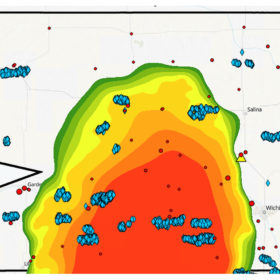
Storing excess energy in underground salt caverns in Kansas
Extensive salt beds lie under the surface in Kansas and the state’s Geological Survey is planning to use them to help address the challenge of intermittent production from solar and other renewable sources.
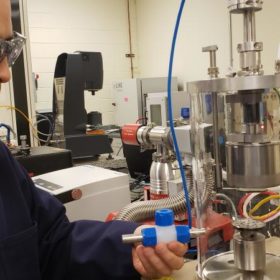
Cobalt-free, solid-state, lithium-ion battery plant opens in Silicon Valley
U.S-based solid-state battery start-up Sparks has opened a pilot plant for its patented lithium battery technology based on zero cobalt cathodes. The company wants to challenge China’s dominance in next-gen battery development.
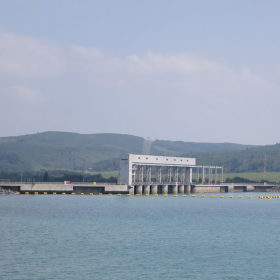
Canadian hydropower dam to be coupled with 180 MW of lithium-ion battery storage
TransAlta has planned to start construction on the storage facility in March 2023 and to complete it within nine months. The 180 MW battery facility is designed to be charged by the existing Ghost Hydroelectric facility when demand is lower.
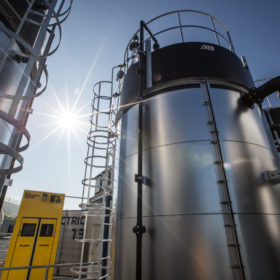
US microgrid project using vanadium redox flow battery
SDG&E and Sumitomo Electric complete a pilot microgrid project in California that successfully powered utility customers solely with energy stored in a flow battery.
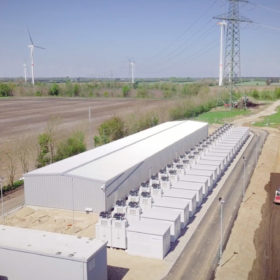
India’s NTPC tenders 500 MW/3,000 MWh of energy storage projects
Global bids are invited to develop a cumulative 500 MW of energy storage system facilities on a “build-own-operate” basis anywhere in India. The proposed plants can be set up ranging in sizes from 100 MW to 500 MW, with the capacity to store at least six hours of electricity — for example, a 500 MW project with a minimum energy storage capacity of 3,000 MWh. Bidding closes on March 11.
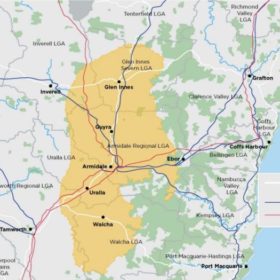
Australia’s NSW declares massive 8 GW renewable energy zone
The New South Wales Government is forging ahead with plans to bring 12 GW of renewable energy and 2 GW of storage online by 2030 with the formal declaration of Australia’s second coordinated renewable energy zone in as many months.
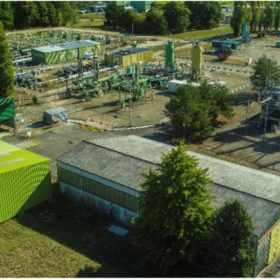
The Hydrogen Stream: Underground hydrogen storage for 1 MW electrolyzer in France
Elsewhere, several hydrogen projects were announced in Norway, Germany, India, China and the UK. Royal Dutch Shell started operations at the power-to-hydrogen electrolyzer in China and Germany’s Linde Engineering signed a contract for the construction a green hydrogen demonstration plant in Norway. Furthermore, Green Hydrogen Systems signed a supply agreement with Edinburgh-based Logan Energy to deliver electrolysis equipment for a project in England.
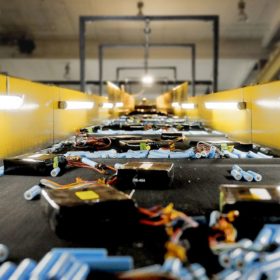
New lithium-ion battery recycling plant in Norway
Canada-based Ly-Cycle has formed a joint venture with Norwegian-headquartered strategic partners Eco Stor and Morrow Batteries to build a new commercial lithium-ion battery recycling facility in southern Norway.

Venture capitalist sees billion-dollar opportunities for solar and storage innovators
Bill Nussey describes in his new book a much larger role that he foresees for local solar and storage, and a correspondingly altered role for electric utilities.
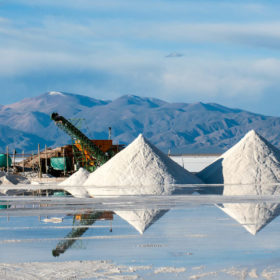
Australian miner’s lithium ambitions cop a battering
Anglo-Australian mining giant Rio Tinto’s ambition to become one of the world’s largest lithium suppliers has taken a battering with the Serbian government pulling the plug on the company’s $3.3 billion ($US2.4 billion) Jadar lithium-borates project.
