
Overlooked supply chain enters Australia’s green hydrogen export mix
As the vision of Australia becoming a leading hydrogen exporter sharpens, questions about the best form in which to send our offering into the world arise. Just in the last fortnight, a Western Australia company has come out with a strong case for a new, largely overlooked form: compressed hydrogen. The ‘curve-ball’ has piqued the interest of many. “I think they’re really doing some very exciting work,” Scott Hamilton, from the Smart Energy Council, told pv magazine Australia.
New deals in Australia’s growing redox flow battery sector
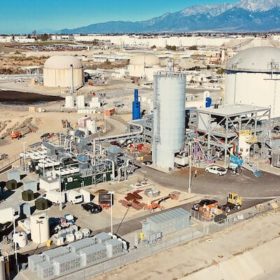
Redflow has agreed to supply biowaste specialist Anaergia with a 2 MWh energy storage system, while Perth-based Technology Metals has signed a deal with Japan’s LE System to potentially make vanadium electrolyte in Australia.
Solar-led renewable energy system could free up 10% of Caribbean nation’s GDP
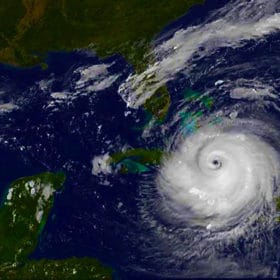
A mix of solar and wind power can help Antigua and Barbuda to an almost-90% renewable energy system, and green hydrogen could then show the path to hitting the national ambition of 100% green power by 2030, and net zero by 2050.

Saipem wants to set up green hydrogen production in Italy, Albania and Morocco
The Italian gas contractor started to develop three green hydrogen projects in the southern Italian region of Apulia and has identified land for potential projects in Albania and Morocco.

Neoen secures first approval for hybrid wind-solar-storage project in Australia
Neoen has secured planning approval for the first stage of its gigantic $2.3 billion Goyder South project in Australia. The French renewables company has also revealed plans to exceed 10 GW of global capacity by 2025.
Portuguese authorities review 1 GW solar project with Tesla batteries
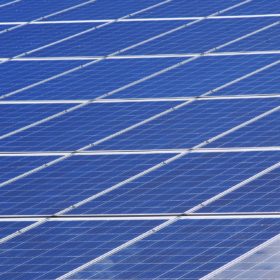
A newly proposed solar project in Portugal could almost double the nation’s installed PV capacity. The installation will likely require an investment of around €1 billion.

Australian port to host massive PV array, hydrogen plant
London-based Eco Energy World plans to combine a 300 MW solar project in Australia with a 200 MW hydrogen plant and 100 MW of energy storage to export green hydrogen to the global market.
Northvolt acquires lithium-metal battery start-up Cuberg
The technology developed by a business spun out of Stanford five years ago could deliver an electrolyte with energy density of more than 1 kWh/l.
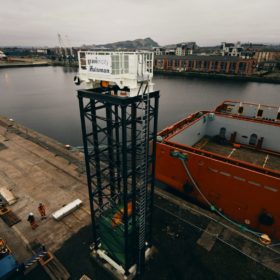
UK start-up builds gravity-based storage system at Scottish port
Scottish start-up Gravitricity has begun construction of a 250 kW gravity-based energy storage project at Port of Leith. A 15m-high rig uses renewable energy to raise a mass in a 150-1,500m shaft and discharges the electricity thus ‘stored’ by releasing the mass to rotate an electric generator.
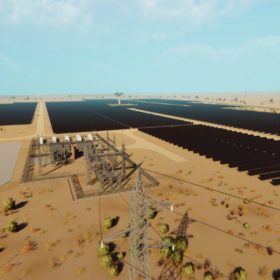
20 MW/5 MWh solar-plus-storage project set to begin construction in Malawi
The Golomoti solar plant is expected to come online in 2022. The plant will be used to provide grid stability and reduce national dependence on diesel generators and hydroelectric generation.
