
The Hydrogen Stream: Ukraine invasion raises price of gas-powered grey ammonia
With fears over Europe’s gas supply tightening, the Australian government is forging ahead in the green hydrogen sector by launching tech incubator HyGate and awarding Volt Advisory Group cash to develop a renewable energy microgrid. Australian business Fortescue Future Industries and Europe’s Airbus will work on hydrogen-powered aircraft and Kawasaki Heavy Industries is making strides in transporting hydrogen from the state of Victoria.

IEA outlines plan to rapidly reduce dominant role of Russia in Europe’s energy markets
The International Energy Agency today published a 10-point plan for Europe to reduce its reliance on natural gas imported from Russia. The plan would see Russian gas imports to EU member states reduced by one third within a year, and notes that further reductions within this timeframe would come with significant tradeoffs, likely to impact both energy prices and Europe’s Green Deal. The plan was presented by Fatih Birol, executive director of the IEA, in a virtual press conference held earlier today.

‘This is wartime and wartime requires war economy measures’
In a chat with pv magazine, Christian Breyer – Professor of Solar Economy at Finland’s Lappeenranta University of Technology – explains which consequences the war in Ukraine may have on Europe’s energy landscape. According to him, only an unprecedented development of renewable energies, heat pumps and storage may help address the current energy crisis.
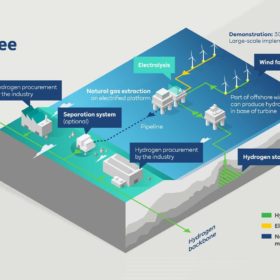
The Hydrogen Stream: Offshore green hydrogen project in the Dutch North Sea
As research into non-rare metal catalysts continues, companies in northwest Europe are working on an offshore green hydrogen demonstration project, the first European data center to run on green hydrogen, and on hydrogen-based solutions for container transport. Meanwhile, European institutions are prepping for stronger hydrogen collaboration with Africa.
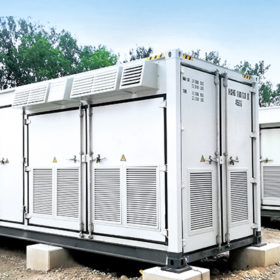
Italy’s third Capacity Market auction expected to open new opportunities for large-scale storage
The retirement of coal baseload capacity, some regulatory adjustments and high energy prices volatility could bode well for the deployment of batteries in Italy, and especially in Sicily. Problems, mostly related to the timing and the structure of the auction, remain, however. We spoke about it with Michele Scolaro, Aurora Energy Research Associate.
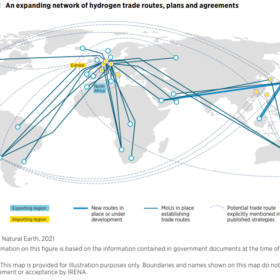
Green hydrogen could disrupt global trade, bilateral energy relations
While there are still many uncertainties as to the way in which hydrogen trade might evolve and change economic ties and political dynamics between countries, experts agree that green hydrogen can bring winds of change to the global energy arena. According to the International Renewable Energy Agency, significant geoeconomic and geopolitical shifts are just around the corner.
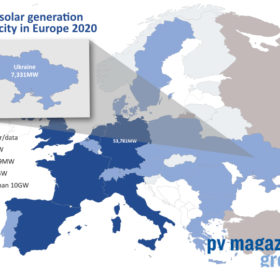
‘Ukrainian gas – and renewables – can offer Europe energy security’
While the chief executive of Ukraine’s biggest private energy company scrupulously mentioned the role renewables could play in counteracting the Nord Stream 2 gas pipeline, he called for his country’s gas market to be liberalized just as the European Commission appears set to rubber stamp gas as ‘sustainable.’

Faster permitting crucial to help Italy add 70 GW of renewables this decade
In a chat with pv magazine at the Key Energy event in Rimini, Roberta Valenziani, of Italian trade body Elettricità Futura, explained the factors preventing Italy’s PV market from having a renaissance. She said the country has Europe’s longest delays and highest costs for obtaining permits for large scale solar.
Co-located hubs key to battery industry competitiveness
A report from Australia’s Future Battery Industries Cooperative Research Centre which analysed the development of battery hubs in the U.S., Germany and Japan, has found that co-location and cooperation between industry and government were key to their success. For Australia to play the same game, it will have to leverage its wealth of resources, and clean up its act along the way.
China can ensure a 1.5C world – and continue to dominate the global clean energy supply chain
A report by the IEA laying out two routes for China to reach net zero attempts to persuade policymakers to gun for that goal by 2050, rather than ten years later, and dangles the prospect of continued global dominance as the main reward on offer.
