
Stake in Greece’s distribution grid sells for €2.1bn
The state-owned electric utility has agreed to sell 49% of its shares in the grid. The sale is expected to boost the country’s transition to a greener and smarter energy system.
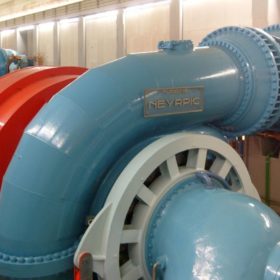
Indonesia moves forward with 1 GW pumped storage hydropower plant
The World Bank has agreed to finance part of a project owned by Indonesian state-owned utility, PLN. The facility is planned to enable a larger penetration of renewable energy to provide with power two large demand centers in West Java.

Proposals received for latest version of delayed Kuwaiti gigasolar project
With the Dabdaba/Al-Dibdibah solar field now having been combined with the Shagaya clean energy development, bids for the former’s EPC contract were reportedly received last week. It is unclear whether the facility will have a generation capacity of 1 GW, 1.5 GW or ‘up to 3 GW.’
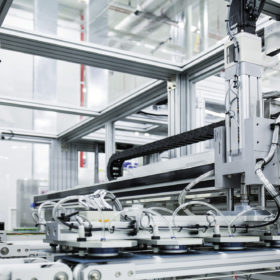
Hanwha Q Cells unveils plan to produce perovskite, TOPCon solar modules
The $1.28 billion plan includes a 3.1 GW production capacity expansion in South Korea, where the company’s solar module capacity will reach 7.6 GW by 2025.
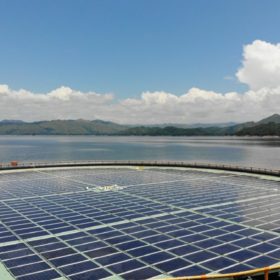
The world’s first large scale hybrid hydro-floating solar power plant
A Norwegian consortium led by Scatec is planning to build a hybrid hydropower-floating PV plant at an unspecified location in West Africa. Building both facilities simultaneously will help its developers define a series of parameters for proper sizing, optimization and design, and set a benchmark for future projects of this kind.
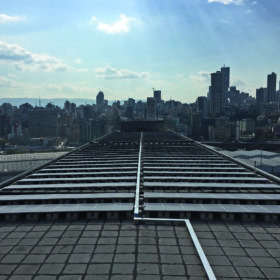
The weekend read: Will Lebanon’s solar rise?
A year after a sudden explosion in Beirut killed more than 200 people, destroying solar installations in the port and sending the country into a complete downfall, a question emerges: Can Lebanon use this experience to set its economy on a new sustainable pathway, supported by a viable energy sector? Solar energy offers some lessons.
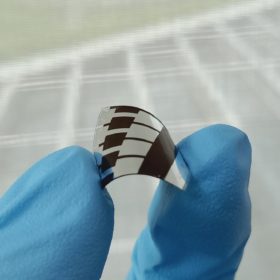
Co-evaporated perovskite solar cell with 20.6% efficiency
Researchers in Singapore have built what they claim is the industry’s most efficient, large-area co-evaporated solar cell. According to their findings, the device has exhibited remarkable thermal stability and could reach commercial maturity within the next few years.

Australian startup sets 25.54% efficiency record for silicon cell
SunDrive said it has created the most effective commercial-sized silicon solar cell in the world, achieving an efficiency figure of 25.54% in testing carried out by Germany’s Institute for Solar Energy Research (ISFH).
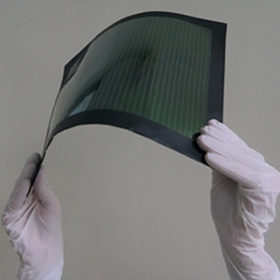
Toshiba claims 15.1% efficiency for polymer film-based large-area perovskite solar module
The result is claimed to be the highest efficiency ever reached for a large-area, polymer film-based perovskite photovoltaic module. The device has an area of 703 square centimeters and was fabricated through a new coating method.
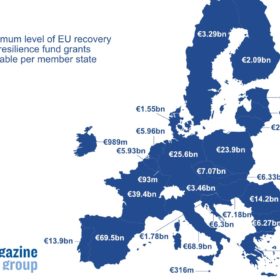
EU to start auctioning green bonds next month
An independent third-party has approved the European Commission’s safeguards to ensure the projects in member states financed by €250 billion of green bonds over the next five years, will have genuine emission reduction credentials.
