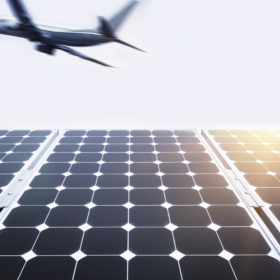
The weekend read: Guilt-free solar flying?
Synthetic kerosene produced from green hydrogen promises emissions-free air travel. That sounds good – and it does not even cost that much. But there is still much more work to be done. After all, only fuel-cell airplanes can make hydrogen-powered flight truly climate-neutral, and it will take some time before these aircraft are ready for widespread use.
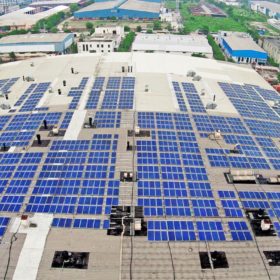
Indian developer Azure Power secures 2 GW solar project through much-criticized manufacturing-linked tender
The NYSE-listed developer must establish a total 500 MW of annual cell and module manufacturing capacity as part of the deal and has agreed with an Indian panel producer to jointly develop the production lines with Azure holding a majority stake in the enterprise. The developer has an option to double up to 4 GW of project capacity within the next four days.
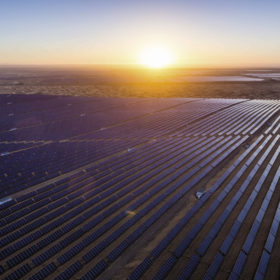
CPIA: China will add 40 GW of solar in 2020
The China Photovoltaic Industry Association secretary-general has revealed the world’s biggest solar market is unlikely to add more than 30 GW of solar generation capacity this year after just 17.5 GW was installed to the end of October.
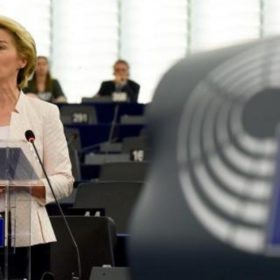
EU Commission presents ‘historic’ European Green Deal plan
Described as “historic”, the draft outlines the future climate protection course of the European Union. Overall, the EU should become climate neutral by 2050, and trigger €1 trillion in investment. €100 billion is expected to be made available for the transition. This is to be formalized in a climate law in the coming months. Although solar was noticeably absent in the draft, plans have been detailed by SolarPower Europe as to how it could be included.
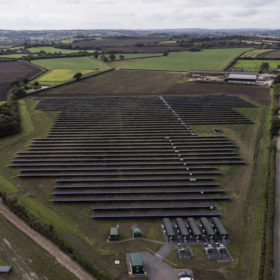
Green shoots of recovery
There has been significant progress in the decarbonization of the electricity supply in Great Britain in recent years, underscored by a record run of 19 days of zero coal generation in May and June 2019. With National Grid’s stated aim of operating a carbon-neutral electricity system by 2025, the co-location of PV with battery storage could play a key role. The proposition offers the twin benefits of enabling increasingly high renewables penetration while simultaneously improving network stability. Adam Sharpe of Everoze explores the role of co-located PV and energy storage assets within the context of the UK’s future decarbonization plans.

Neural networks improving solar power forecasting
An international research team has developed a new approach for solar power forecasting that combines neural networks and pattern sequences for the first time. The performance of the new Pattern Sequence Neural Network (PSNN) was tested on an Australian data set that includes information from two years of forecasts. It can be used with different clustering and cluster-sequence extraction algorithms, and can be applied to multiple related time sequences
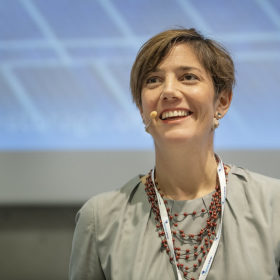
The sun rises on a European Green Deal
As the European Commission prepares its strategy for a European Green Deal, it is important to understand how solar can deliver on ambitious climate targets.
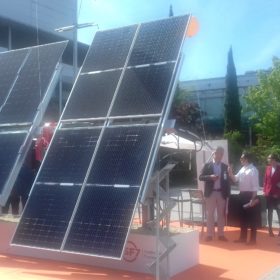
Europe on track for decade-topping 16.7 GW of new solar this year
Trade body SolarPower Europe’s preliminary statistics suggest this could be the continent’s best year for PV since 2010, with capacity additions set to soar 104% year on year. Spain is leading the way with an expected 4.7 GW of new solar, followed by Germany, with 4 GW.

Netherlands: Bid to exclude grid-congested areas from subsidy fails to stem solar tide
Some 7,525 renewables projects with a total generation capacity of 6,223 MW are under review by the Dutch Ministry of Economy in the second round of the SDE+ program for this year. Solar accounts for 74.7% of the submitted capacity.
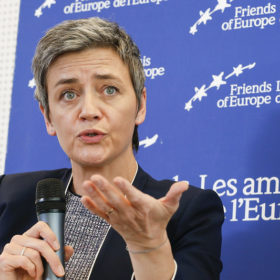
Europe approves €3.2bn to support battery R&D
The European Commission has approved use of funds given by seven member states to back Europe-wide R&D projects across the lithium-ion battery value chain, with the aim of potentially unlocking an additional €5 billion in private sector investment.
