
The Hydrogen Stream: China may hit 2025 green-hydrogen targets a year early
Rystad Energy says China appears set to smash its national hydrogen targets, solidifying its lead in the global electrolyzer market, while European Union and Japan have agreed to cooperate on hydrogen research.
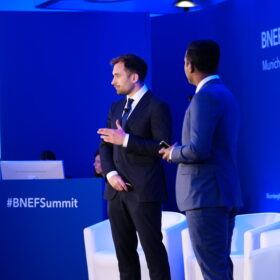
BNEF Summit highlights sluggish trading of low-carbon hydrogen, derivatives
Analysts at the recent BNEF Summit in Munich discussed delays for hydrogen adoption in European countries, noting that locations are crucial for predicting which hydrogen production plans will proceed. Projects in areas with high amounts of renewables have an advantage.
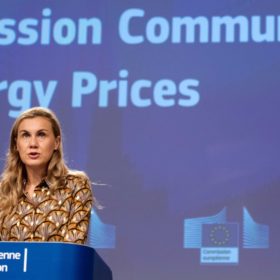
The Hydrogen Stream: Europe launches pilot to improve market transparency
The European Commission says it has started working on a new pilot mechanism, and Italy has agreed to expand collaboration with Austria and Germany, while also supporting cooperation between Italian companies and Finland’s Wärtsilä.
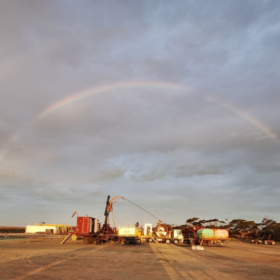
Australian hydrogen developer hits purity high in testing
Natural hydrogen explorer Gold Hydrogen says it has uncovered 95.8% pure hydrogen at its Ramsay Project on South Australia’s Yorke Peninsula as it seeks to tap into growing demand for the gas as a clean energy source.

The Hydrogen Stream: Japanese scientists develop proton-conducting perovskites for fuel cells
Scientists from the Tokyo Institute of Technology (Tokyo Tech) and High Energy Accelerator Research Organization (KEK) have developed a highly oxygen-deficient perovskite for protonic ceramic fuel cells (PCFCs), while the European Commission has approved its fourth Important Project of Common European Interest (IPCEI).

European Commission approves €1.4 billion for hydrogen projects
The European Commission has approved €1.4 billion ($1.5 billion) for hydrogen projects, investing in 13 initiatives under the fourth Important Project of Common European Interest (IPCEI), to advance hydrogen technology in mobility and transport applications.
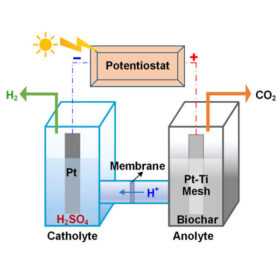
Producing hydrogen fuel from solar power and agricultural waste
Using 600% less voltage to produce hydrogen, a research team at the University of Illinois Chicago has developed a new method for splitting water.
Clean Power Hydrogen launches membraneless electrolyzers
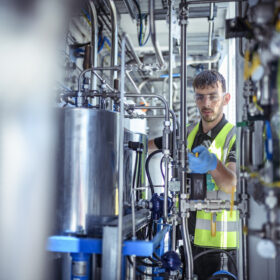
Clean Power Hydrogen (CPH2) is launching membraneless electrolyzers with cryogenic systems to separate hydrogen and oxygen. It is producing them in the United Kingdom and is collaborating with other companies for production in Germany and New Zealand. It says it expects 4 GW of combined production capacity by 2030.
PV-to-methanol plants may maximize returns in reserve markets
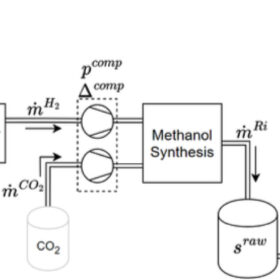
New research from Denmark shows PV-to-methanol facilities may achieve 30% lower levelized cost of methanol through engagement in reserve markets. The researchers examined the ability of a PV-to-methanol plant to contribute to the grid in frequency containment reserves (FCR), automatic frequency restoration reserves (aFRR), and manual frequency restoration reserves (mFRR).
The Hydrogen Stream: Climate group dampens hopes for blue hydrogen
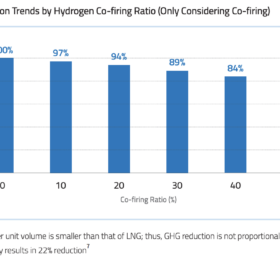
Solutions for Our Climate (SFOC) says in a new report that blue hydrogen might not be an effective climate solution, while TotalEnergies and its partners have agreed to explore green hydrogen potential in Tunisia.
