
The Hydrogen Stream: Liquid hydrogen test flight could enable long-distance flights
H2FLY claims that a recent three-hour test flight, entirely powered by liquid hydrogen, could lead to sustainable long-range flights fueled by liquefied, cryogenic hydrogen. Solaris, meanwhile, has started selling hydrogen buses in Italy.
The Hydrogen Stream: combination of power grid expansion and hydrogen network cheapest option in a net-zero system
Researchers found out that the cheapest way to reach a net-zero system in Europe includes a power grid expansion and a hydrogen network. Meanwhile, Lhyfe signs a PPA for its hydrogen facility in Bretagne, and Nortegas reaches 15% of hydrogen in replica of its distribution network in Spain.

Brazil could produce green hydrogen for $2.87/kg, says consultancy
Sao Paulo-based Clean Energy Latin America says green hydrogen could be produced in Brazil at a levelized cost of hydrogen (LCoH) of $2.87 and $3.56 per kg in some strategic locations.

The Hydrogen Stream: Gulf nations moving forward with tech cooperation
Acwa Power and Eni have signed a hydrogen development deal, while AFC Energy has signed an agreement with Tamgo to sell hydrogen generators.

The Hydrogen Stream: North African hydrogen development stokes concerns
French researchers have identified a number of potential social issues that may arise as North Africa develops its significant hydrogen potential, while the European Commission has released the details of its pilot auction for European renewable hydrogen production.
The Hydrogen Stream: Hydrogen buses less efficient than battery models
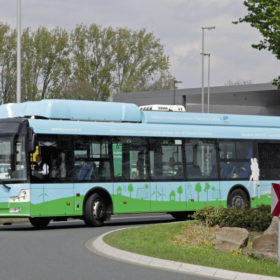
Italian researchers have compared the performance of hydrogen and electric buses in northern Italy, while DNV has released its guidelines to validate claims related to low-carbon renewable hydrogen and ammonia attributes.
Driving down solar costs key to unlocking green hydrogen future
Jim Tyler, CEO of solar tech specialist Erthos, says that reducing the cost of solar electricity will be needed to unlock the next chapter of the energy transition: a green hydrogen economy.
The Hydrogen Stream: Water splitting with solar-to-hydrogen efficiency of 12%
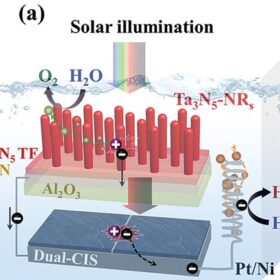
A Japanese team is working on a solar water splitting system with a 12% solar-to-hydrogen efficiency, while UK researchers have identified the reason why graphene’s dense crystalline structure is much more permeable to protons.

Australian startup aims to produce hydrogen with 30% less electricity
The Commonwealth Scientific and Industrial Research Organisation (CSIRO), Australia’s national science agency, has teamed up with RFC Ambrian to form a new company to commercialize electrolysis tech. CSIRO said the aim is to produce hydrogen with 30% less electricity than existing alkaline and polymer electrolyte membrane technologies.
Novel algorithm to prevent overinvestment in power-to-gas in areas with high PV penetration rates
Scientists in South Korea have created an algorithm that reportedly prevents oversizing of power-to-gas systems located in areas with large shares of solar and renewable energy capacities. The algorithm calculates saturation points for both PV and power-to-gas facilities.
