The Hydrogen Stream: Hydrogen buses less efficient than battery models

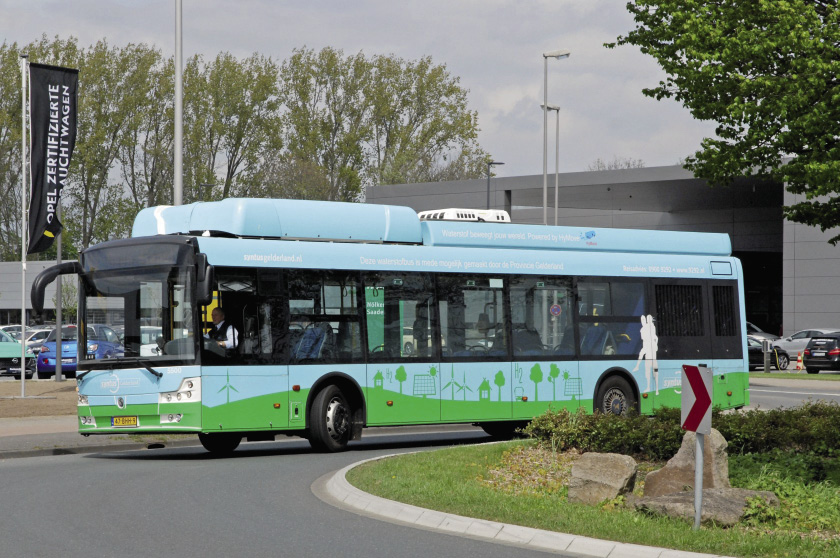
Eurac Research scientists have analyzed data from 21 fuel cell electric buses (FCEB) and battery electric buses (BEB) in Italy, comparing efficiency, consumption, temperature sensitivity, distances, and cost. The team has found that the Solaris Urbino 12 FCEB model covered the maximum distance (300 km), followed by Solaris Urbino 12 Electric BEB (279 km), Mercedes O530 Citaro FCEB (271 km), and Solaris Urbino 18 Electric BEB (215 km). Hydrogen buses’ tank-to-wheel (TTW) efficiency is lower than battery electric buses, indicating higher consumption variation for BEBs.
DNV has released service specification DNV-SE-0654, outlining procedures to verify low-carbon hydrogen and ammonia claims. Oslo-based DNV’s new service helps hydrogen producers document compliance, ensuring transparency and credibility in claims, offering validation based on specific attributes.
The Malaysian government has outlined plans for three low-carbon hydrogen hubs in Sarawak State by 2027, featuring a green hydrogen production plant in Kuching by 2025 and two Bintulu plants by 2027 for export. Senior Electrical Engineer Dinesh Manoharan stated that Malaysia’s aim to phase out gray hydrogen by 2050, producing up to 2.5 Mtpa of green hydrogen from renewables, targeting hydrogen adoption in 5% of heavy vehicles by 2050.
Worley has collaborated with Princeton University to devise a 10-point action plan for Europe’s renewable hydrogen sector. Broad adoption of the plan could reduce delivery times by 40% while maintaining disciplined investment. The plan advocates for increased global electrolyzer manufacturing capacity, offshore wind capacity additions, and desalination capacity to achieve the EU’s 10 MTPA renewable hydrogen production goal by 2030.
Enoah said it has placed an order for 101 AEM Electrolysers EL 4.0 from Enapter, scheduled for delivery between the third quarter of 2023 and the first quarter of 2024. The purchases is in line with the company’s expertise in producing fuel cells and electrolysis systems for Power-to-Power applications.
This content is protected by copyright and may not be reused. If you want to cooperate with us and would like to reuse some of our content, please contact: [email protected].

Please login to comment


If you consider a real world commercial operation for a bus company
working usually from around 5:30 AM to 1:30 AM,Hydrogen Fuel Cell buses are far more efficient than battery electric buses which would have to lose daily 9 hours at recharging.The hydrogen bus takes only a few minutes to be refueled.An hydrogen fuel cell bus is available 24/24,7/7,365/365,no matter the weather.The real availability of an hydrogen bus is around 98 %.For a battery bus,it’s around 60% in good weather,50% in cold weather.
If you want a good idea,one hydrogen fuel cell bus can do the job of three battery electric buses.
The mistake is coming from the Tank-to-Wheel criteria.They wrongly calculate it by starting with a fully recharged battery or refueled hydrogen cylinders and so they skip the issue of long recharging times (3 to 4 hours in the best weather conditions),especially in a full commercial activity.It’s even truer for trucks,hydrogen FC taxis…etc,vehicles working most of the time in a normal operation.
[…] Source link […]
[…] قام باحثون إيطاليون بمقارنة أداء الحافلات الهيدروجينية والكهربائية في شمال إيطاليا، بينما أصدرت DNV إرشاداتها للتحقق من صحة المطالبات المتعلقة بخصائص الهيدروجين والأمونيا المتجددة منخفضة الكربون.اقرأ أكثر […]
[…] Read More […]