
Solar-driven photoreactors to generate hydrogen on rooftops
Scientists led by the Karlsruhe Institute of Technology have designed panel-like photoreactors relying on a water-splitting photocatalyst that could produce hydrogen on rooftops or dedicated solar farms. They claim the photoreactors have high economic potential because of their ‘extremely’ low costs.
The Hydrogen Stream: Northern Europe can produce green hydrogen
Finnish researchers have said in a new report that northern European countries could produce cheap hydrogen domestically, while TotalEnergies, Schneider Electric and other companies signed new hydrogen project deals.
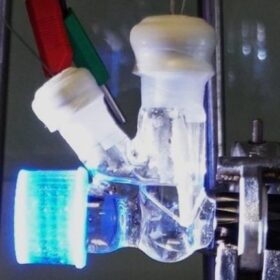
PV-powered tech to convert CO2, plastics into suistanable fuels
Cambridge scientists have designed a new reactor that is able to convert CO2, water, and plastics into syngas. The system utilizes a photoelectrochemical device powered by an encapsulated triple cation perovskite-based photocathode and an alloy anode.
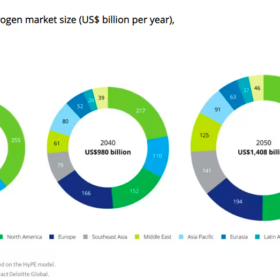
The Hydrogen Stream: Hydrogen market to surpass LNG by 2030, says Deloitte
Deloitte says it expects steady hydrogen market growth, with annual revenue projected to hit $1.4 trillion by 2050, while Denmark and the Netherlands have started discussing hydrogen collaboration with the governments of Namibia, South Africa, and Morocco.

Weekend Read: Race to the top
A flurry of clean energy announcements in the European Union this year bodes well for the expansion of renewables but there will be a race against time to get key legislation adopted before next summer’s European elections.
US green hydrogen market set to surge to $1.4 trillion by 2050, says Deloitte
By 2050, the practice of using renewable energy to electrolyze water and create hydrogen fuel could become a global market of well over $1 trillion, according to a new report by Deloitte.
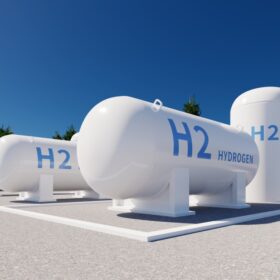
The Hydrogen Stream: South Korea launching hydrogen bidding market
South Korea is opening what it claims is the world’s first hydrogen power generation bidding market, while the International Energy Agency says that Omani hydrogen production could surpass current European consumption levels.
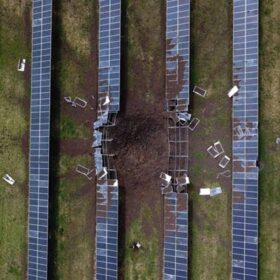
A bright spot in the darkest hour
Solar is not only helping to keep the lights on in Ukraine – it also has a vital role as part of Europe’s energy transition and clean energy economy.
Australian developer moves forward with solar-to-hydrogen project
The Hydrogen Collective (H2C), an Australian project developer, has revealed plans to build a solar-powered production facility in the state of Queensland. The facility, set to be operational from later this year, will supply commercial customers with green hydrogen. Construction is scheduled to start in the coming weeks.
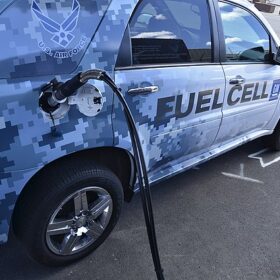
The Hydrogen Stream: US unveils green hydrogen strategy
The US government has identified the hydrogen sector as a key energy opportunity, while Hystar has signed its first PEM electrolyzer deal and Plug Power has agreed to supply fuel cells for long-term storage during emergencies in California.
