
Italy deploys 1.72 GW of new PV systems in Q1
Italy installed 1.72 GW of new solar capacity in the first quarter, bringing its cumulative installed PV capacity to 32.0 GW by the end of March, according to Italia Solare, the nation’s solar energy association.
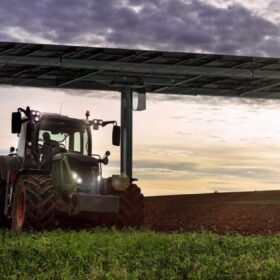
Austrian startup offers double-axis tracking system for agrivoltaics
Anywhere Solar says its new trackers have a module area of 75 m2 and can host PV systems up to 19 kW in size. When deployed horizontally, the systems allow vehicles up to 4.3 meters high to pass underneath.
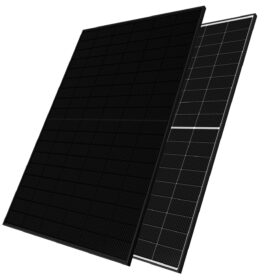
Sharp unveils new TOPCon solar modules
The Japanese electronics manufacturer has launched the NU-JC440 and NU-JC430B panels with efficiencies of 22.53% and 22.02%, respectively. Both products are IEC/EN61215 and IEC/EN61730-certified and rely on M10 wafers.

Construction begins on Sweden’s largest rooftop PV system
Brion Solenergi has started working on the Nordic region’s biggest rooftop solar project. The 14 MW array will span the rooftop of a warehouse owned by Danish transport company DSV.
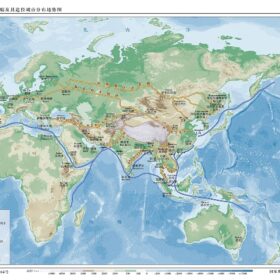
Chinese scientists apply new models for sustainable wind, solar investments in Belt and Road Initiative countries
To assess renewable energy, particularly solar and wind, considering the limited supply of input materials, researchers from Shenzhen University established novel hybrid multi-criteria decision-making (MCDM) models that include a circular economy principles, waste potential and life cycle assessment (LCA).
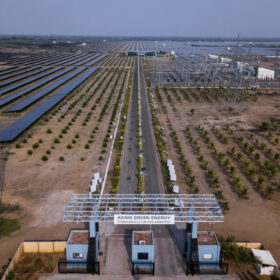
India set to install 21.2 GW of solar in fiscal 2025
JMK Research projects that 21.2 GW of new solar capacity will be installed in India in fiscal 2025. The new additions will include 16.5 GW of utility-scale PV, 4 GW of rooftop solar, and 700 MW of off-grid installations.
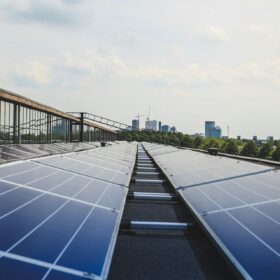
Ireland opens fixed tariff scheme for small-scale solar projects
The second phase of Ireland’s Small-Scale Renewable Electricity Support Scheme (SRESS) is aimed at local communities and small- and medium-sized enterprises that produce their own electricity.

Chinese PV Industry Brief: Cumulative PV capacity tops 670 GW
China’s cumulative PV capacity has surpassed 670 GW. The nation deployed approximately 60.5 GW of new solar in the first four months of 2024, including 14.37 GW in April alone.
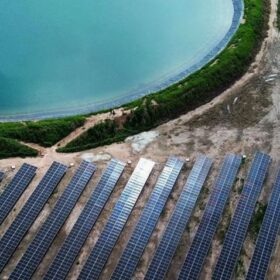
Photovoltaics for center-pivot irrigation
Developer Loop Energia has built a 1.2 MW offgrid solar plant that now serves a center-pivot irrigation system in the Brazilian state of Bahia. The project reportedly enables local farmers to double soybean harvesting by achieving considerable savings through significantly lower diesel consumption.

When is the next Aurora due and what’s the impact on solar generation?
In a new weekly update for pv magazine, Solcast, a DNV company, explains that the solar cycle does tend to increase the earth’s average annual extra-terrestrial irradiance, but only by a very small amount. It also explains that, while the annual cycle of extra-terrestrial irradiance causes a steady, predictable and significant 3.5% change through the seasonal cycle, the peak of the 11-year cycle of solar activity causes a smaller, more sporadic and unpredictable set of fluctuations.
