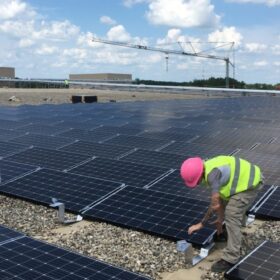
US commercial PV can meet 35% of electricity demand of manufacturers
Northeastern University researchers have looked at energy use in manufacturing sectors and have found great potential for facilities to generate a portion of their own power with on-site rooftop solar installations.
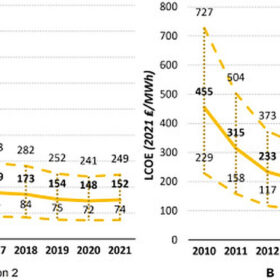
UK solar systems to be 50% cheaper by 2035, say UK researchers
University of Surrey researchers say that by 2035, the levelized cost of energy (LCOE) for small projects and utility-scale PV systems could decrease to GBP 149 ($187)/MWh and GBP 51/MWh, respectively.
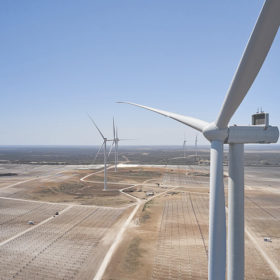
Tools to monitor PV hybrid system performance
Owners and operators of PV hybrid systems need to monitor and control system operation and performance, which generally involves the collection of big data sets. Data visualization techniques can simplify the monitoring and allow issues to be quickly recognized, says IEA-PVPS.

German heat pump sales grow by 111% in first quarter
Sales of gas and oil heating systems are also increasing, however, as the current figures from the Federation of German Heating Industry show. Overall, the market grew by 38% to 306,500 new heaters sold. However, the German Renewable Energy Federation warns against postponing the country’s Building Energy Act requirements to 2027.
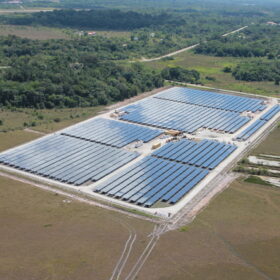
France allocates 49.8 MW in PV tender for non-interconnected areas
CRE, the French energy regulator, originally planned to allocate 83 MW in its latest procurement exercise.

Norway’s PV capacity hits 373 MW
Norway added 152.7 MW of new solar capacity in 2022 and around 70 MW in the first four months of this year.
Indonesia’s race to net zero
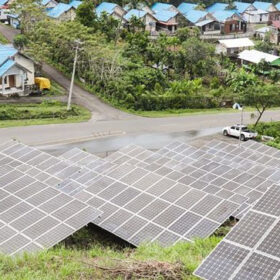
Coal-dependent Indonesia has huge solar potential but progress toward a net zero economy has been sluggish, explain Daniel Kurniawan and Fabby Tumiwa from the Institute for Essential Services Reform (IESR), an Indonesian thinktank.
The world can manufacture enough solar to reach decarbonization goals
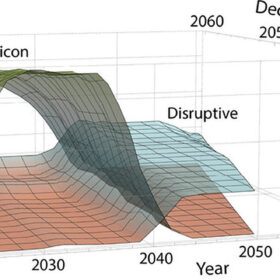
NREL researchers model viable pathways to supplying the estimated 60 TW of capacity required for decarbonization, and study the effect that disruptive solar technologies may have on deployment cost and market opportunity.
Germany’s PV systems inject 40 GW of PV into grid for first time
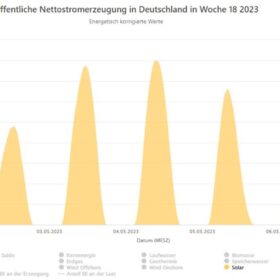
In the first week of May, the photovoltaic systems installed in Germany made the largest contribution to net electricity generation. They fed a total of 1,744.46 GWh of solar power into the grid and thus had a share of 23.6%.
Novel thermoacoustic heat pump system for residential applications
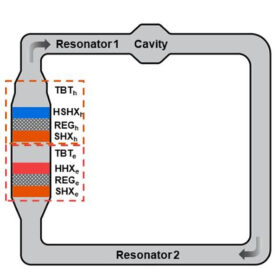
Developed by Chinese researchers, the system is designed to reach a heating capacity of 5.7 kW and an overall coefficient of performance of 1.40 at nominal conditions. It is made with an engine unit, a heat pump unit, and a gas resonator unit in a loop.
