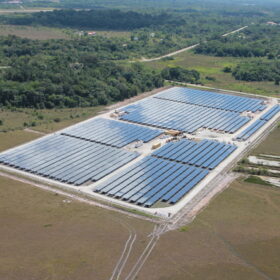
France allocates 49.8 MW in PV tender for non-interconnected areas
CRE, the French energy regulator, originally planned to allocate 83 MW in its latest procurement exercise.

Norway’s PV capacity hits 373 MW
Norway added 152.7 MW of new solar capacity in 2022 and around 70 MW in the first four months of this year.
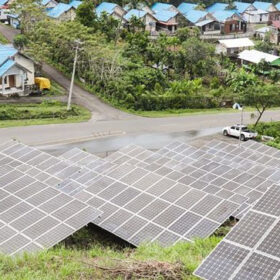
Indonesia’s race to net zero
Coal-dependent Indonesia has huge solar potential but progress toward a net zero economy has been sluggish, explain Daniel Kurniawan and Fabby Tumiwa from the Institute for Essential Services Reform (IESR), an Indonesian thinktank.
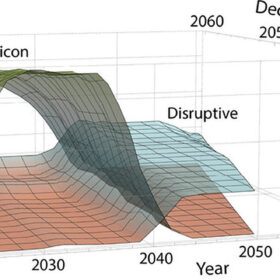
The world can manufacture enough solar to reach decarbonization goals
NREL researchers model viable pathways to supplying the estimated 60 TW of capacity required for decarbonization, and study the effect that disruptive solar technologies may have on deployment cost and market opportunity.
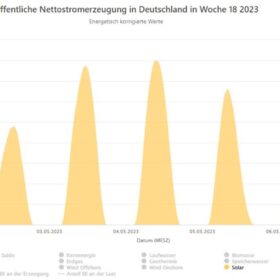
Germany’s PV systems inject 40 GW of PV into grid for first time
In the first week of May, the photovoltaic systems installed in Germany made the largest contribution to net electricity generation. They fed a total of 1,744.46 GWh of solar power into the grid and thus had a share of 23.6%.
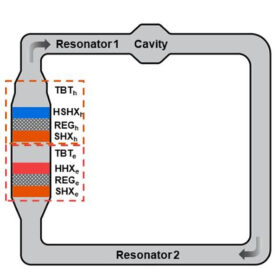
Novel thermoacoustic heat pump system for residential applications
Developed by Chinese researchers, the system is designed to reach a heating capacity of 5.7 kW and an overall coefficient of performance of 1.40 at nominal conditions. It is made with an engine unit, a heat pump unit, and a gas resonator unit in a loop.
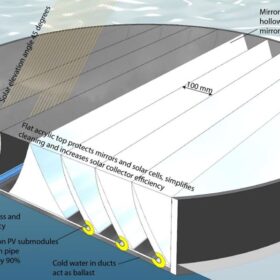
Floating concentrating photovoltaic thermal system for carbon capture
Two Norwegian companies are designing floating concentrating photovoltaic thermal technology that can produce both electricity and heat. It is intended for use in carbon capture projects and to be supported by an industrial heat pump system.

Weekend Read: Japan turns to the rooftop
Japanese policymakers are now looking at rooftop solar panels as land is scarce in the country and agrivoltaics, building-integrated PV (BIPV), and floating solar are still in their infancy, reports Mark Hutchins.
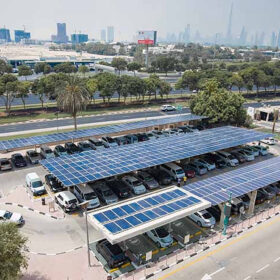
United Arab Emirates’ solar market
The UAE is expected to generate 25% of its electricity from solar energy and have a total installed solar capacity of 44 GW by 2050. The Middle East Solar Industry Association (MESIA) describes the challenges the country has to address to make this target achievable.
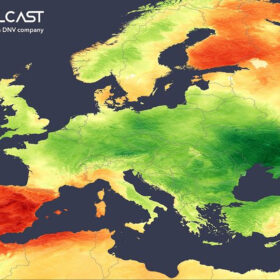
Low pressure impacted Europe PV production in April
In a new weekly update for pv magazine, Solcast, a DNV company, presents the solar irradiance data it collected for Europe in April. These data show that Spain benefitted from solar irradiance 20% to 30% above average during the last month, while in the rest of Europe irradiance was below average.
