
Ukraine’s law on FIT restructuring has passed: The expert view
Ukrainian renewable energy lawyer Svitlana Teush takes a look at the law which will define the cuts to be applied in Ukraine after extensive negotiation between government and the clean energy industry.

Construction begins on 64 MW unsubsidized Polish solar plant
The project, set to be commissioned this year, will sell power to an unspecified industrial client under a power purchase agreement.
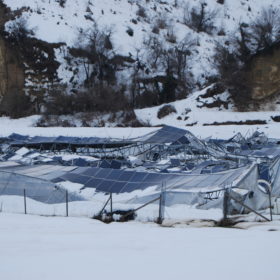
The cost of building stronger PV systems
Scientists in the U.S. have estimated the expense of strengthening solar systems. The researchers stressed that the upfront investment needed to take 13 key measures may be outweighed by the benefits.
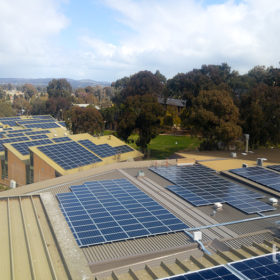
Australian rooftop PV may face grid constraints
The ability to feed electricity from rooftop PV arrays into Australia’s distribution network may be severely limited in the future, as installations appear likely to exceed expectations. A Cornwall Insight forecast sees some 24.45 GW of rooftop solar to be added through 2030 – a rate that accelerates the need for a distribution-level market and may see connections curtailed in the future.
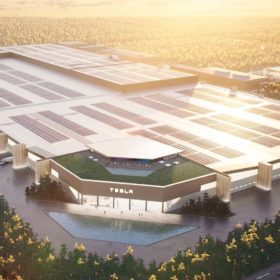
First image of Tesla’s German Gigafactory unveiled, with rooftop PV to boot
Tesla boss Elon Musk has published the first image of the planned Gigafactory in Grünheide, near Berlin, in eastern Germany.

CPV-solar thermal system delivering LCOE of $0.03/kWh
Researchers have created a device to produce electricity and steam at the same time. The system is said to offer 85.1% efficiency and deliver steam at up to 248 degrees Celsius. The converter combines III–V, triple-junction solar cells and a high-efficiency solar thermal system based on parabolic trough collectors.
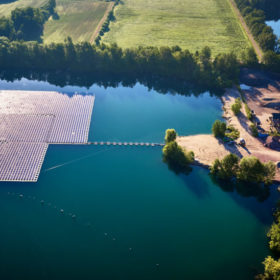
German floating PV plant works better than expected
The volume of solar electricity generated and proportion of self-consumption at the Lake Maiwald floating plant have both surpassed expectations. Gravel company Ossola has been able to reduce its electricity bill 10% as a result.

Switzerland deployed 332 MW of solar last year
Cumulative solar generation capacity reached 2.5 GW last year, enough to meet 3.8% of electricity demand.

From Rwanda to Riverside, California: How the US solar industry gave opportunities to an immigrant entrepreneur
When Covid-19 hit his small solar engineering business, chief executive Methode Maniraguha said: ‘No furloughs or layoffs – we’ll pivot.’

Solar causes highest power peaks under mixed-cloud conditions
Dutch researchers have shown that power peaks caused by solar generation may be stronger under partial cloudiness than clear skies. According to their findings, mixed-cloud conditions can enhance PV power production due to light reflected off clouds, as well as their intermittent shadows on arrays, which reduce module temperatures.
