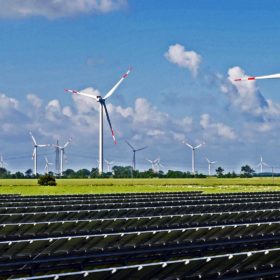
Tata Power builds 300 MW hybrid wind-solar project in India
The project was secured by Tata Power in an auction held by the Maharashtra State Electricity Distribution Company Limited (MSEDCL).
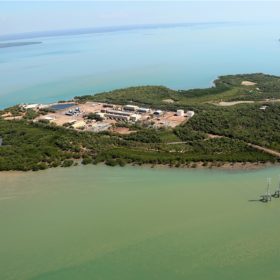
Hitachi wins tender for big battery in Australia, set to pay for itself within five years
Hitachi Energy has won Northern Territory Labor’s tender for the Darwin-Katherine ‘Big Battery’, which is expected to unlock more capacity for residential and industrial PV, generate cost savings of $9.8 million and pay for itself in approximately five years.
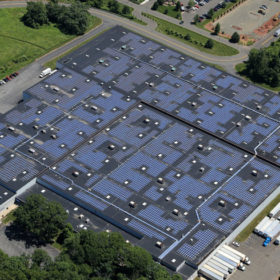
California to require solar power and batteries in commercial structures
The state has updated its Build Energy Efficiency Standards to include requirements for solar plus storage on all commercial and multifamily homes, while also requiring that all new residential construction – which already requires solar – to be energy storage ready.
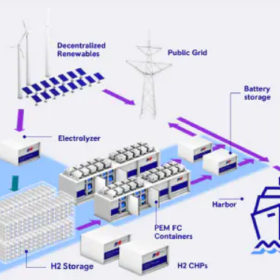
The Hydrogen Stream: Fuel cell solutions for electrical peak load coverage
Rolls-Royce is supplying its mtu hydrogen technology for the container terminal currently under construction at the Port of Duisburg in Germany. Furthermore, German energy company RWE wants to produce green hydrogen at the Pembroke Power Station site in Wales and Norway’s Scatec discussed plans for large-scale seawater desalination, hydrogen and ammonia production based on renewable power with the Egyptian government. Meanwhile, the EU has adopted a set of legislative proposals to decarbonize the EU gas market by facilitating the uptake of low carbon gases, including hydrogen.
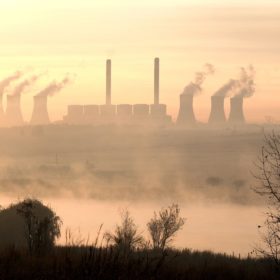
South African utility Eskom allocates land for renewable energy producers
The land will be available for lease in a competitive bidding process. Selected developers will be offered a 20-year contract and the possibility of deploying solar parks with a capacity of up to 100 MW. Eskom says the move will help alleviate South Africa’s energy crisis.

EDF builds 100 MW/100 MWh solar-plus-storage project to power world’s largest remote city
The French energy giant will build the facility near Iquitos, the largest metropolis in the Peruvian Amazon.
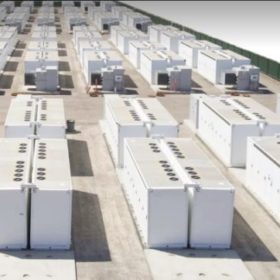
Greenspot plans 500 MW/1,000 MWh battery at former coal-fired power plant in Australia
New South Wales-based development company Greenspot has lodged a planning application for a massive 500 MW/1,000 MWh battery energy storage system to be built at the site of the shuttered coal-fired Wallerawang Power Station near Lithgow in the Central Tablelands.
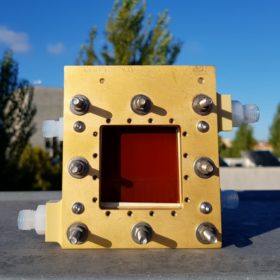
Solar redox flow cell for residential energy storage
The device was designed by scientists in Portugal to optimize light absorption by the semiconductor and ensure an effective diffusion of redox species while offering minimal electronic and ionic transport resistance. The cell has a 25cm2 photoactive area and relies on ferrocyanide/anthraquinone redox flow chemistry and a nanostructured hematite photoelectrode.
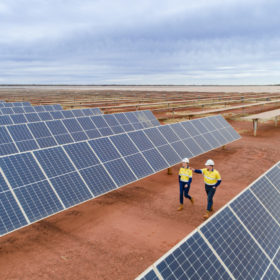
Alinta switches on Australia’s largest remote solar farm
In an Australian first, up to 100% of daytime operations at two major iron ore mines have been powered entirely by renewable energy, as utility Alinta Energy has switched on the 60 MW Chichester Hub Solar Farm in Western Australia’s Pilbara region.

European Commission suggests zero-emission building mandate for 2030
The proposed measure, which will now pass to the Council of Ministers and European Parliament for debate, would further the adoption of PV, according to SolarPower Europe, especially if the commission’s proposal it be applied to public sector structures from 2027 is adopted.
