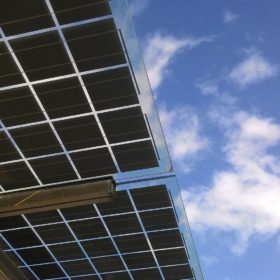
Rendeavour finishes first project of its 30 MW plan for Kenya
The African property developer has completed a 1 MW rooftop PV array at an industrial park in Nairobi. The installation is its first solar project in Kenya and part of a planned 30 MW rollout at Tatu City, its new mixed-use development in the capital.

Petronas jumps into PV market with Amplus acquisition
The Malaysian oil and gas group has purchased solar developer Amplus Energy Solutions from infrastructure investor I Squared Capital. No financial terms of the deal have been disclosed.

More details emerge of China’s $447m solar subsidy for 2019
The NEA has offered a broad hint that RMB3 billion will be made available in incentives this year – including RMB750 million for residential PV. Roth Capital Partners says achieving 40 GW of new capacity will hinge on timely action by the National Energy Administration.
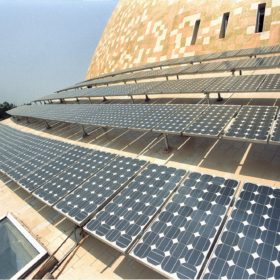
India’s solar sector will outperform globally despite near-term challenges, says Fitch Solutions
With Narendra Modi being tipped to triumph again in the current Indian elections, Indian solar capacity is expected to grow robustly, at 15.3% per year, on the back of continued strong government support.
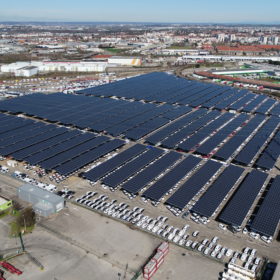
France opens biggest solar carport
The pending electric vehicle transition is all set to offer on-site self-consumption to the already compelling business case for solar carports, says French renewables developer Neoen.

Getting (almost) all our energy from the sun by 2050
Solar could meet approximately 68% of global energy demand with other renewables making up the rest, according to a new report. A 100% renewable energy system could also create 22 million solar jobs by 2050, the study claims. Keeping global warming below 1.5 degrees C, though, would require FITs for projects up to 40 MW in capacity, auctions for bigger systems, removing fossil fuel and nuclear subsidies and providing more education and R&D and less red tape.
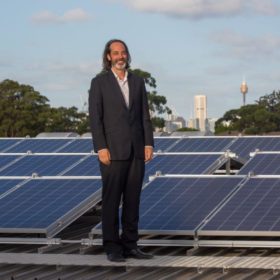
World-first relocatable solar pods power commercial rooftops
Today’s Solpod launch Down Under could be a potential game changer for commercial solar. Substantially funded by the Australian Renewable Energy Agency and supported by energy retailer ERM Power, the product will be trialed across 25 shopping centers and New South Wales government sites.
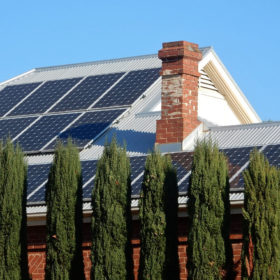
Cross-mating of connectors was chief cause of Netherlands PV fires
According to an investigation conducted by public bodies, cross-mating of connectors was the main common denominator of the incidents studied.
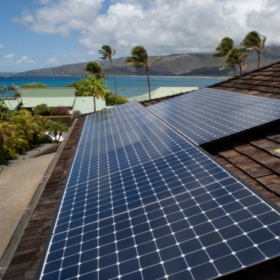
Hawaii utilities seek more renewables, storage and now grid services too
Hawaiian Electric Companies has laid out plans to source the equivalent of 135 MW of solar and 1,378 MWh of energy storage – as well as load shifting and frequency response from distributed energy resources through aggregators.

Polish PV potential yet to be realized
Only 36% of the 360 MW of capacity allocated in Poland’s first two solar auctions is grid connected, according to research institute the IEO. With the completion deadline for the first exercise having expired last year, there is also little time left for developers selected in the second auction to finalize projects. In three auctions held by the Polish government, a combined capacity of 870 MW has been allocated.
