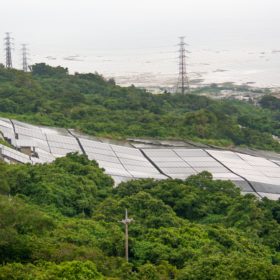
Another disappointing solar auction for Japan as prices stay high
In last month’s exercise, final prices were slightly lower than those seen in previous procurements and the total allocated capacity was 196.6 MW. Through the three tenders held by the Japanese government, around 500 MW of solar was assigned, against a target of 1-1.5 GW. Land availability, grid constraints and high labor costs make projects expensive and force developers to use mountainous regions.

Chile tender to assign up to 9,000 hectares of public land for renewables
Some 8,891 hectares could be allocated through the tender, in the form of 179 plots of land in the northern and southernmost regions of the country.
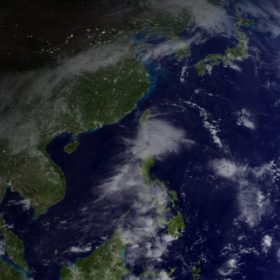
PV Market Alliance expects 120 GW of new solar capacity in 2019
The global market stagnated last year, with around 98 GW deployed. For 2019, the experts expect stronger solar growth, provided there are no setbacks in China.
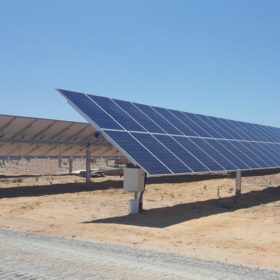
Giant solar complex secures approval in northeast of Brazil
The 540 MW project, in Brasileira, will feature 18 units with a capacity of 30 MW each. The developer is Brazil-based Gruppo Interalli and work on the giant plant is expected to start in the second quarter of the year.
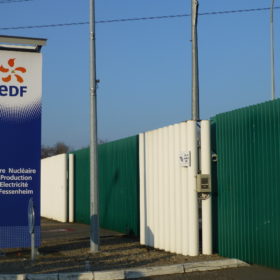
Solar tender for French nuclear site is published
Only four days after receiving approval from the European Commission, the French government has issued the tender for 200 MW of ground-mounted solar and a further 100 MW of rooftops at Fessenheim. The government is considering raising a 30 MW size limit for PV projects on degraded land.
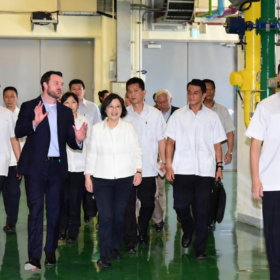
Google signs first solar PPA in Asia
Global technology giant Google this week announced that it has signed an agreement to purchase the output from a 10 MW PV installation in Tainan City, Taiwan, to power its Changhua County data center on the island’s west coast. The agreement represents Google’s first move to procure renewable energy anywhere in Asia, and the first agreement made since a recent change to Taiwan’s Electricity Act allowed non-utility companies to buy renewable energy directly.
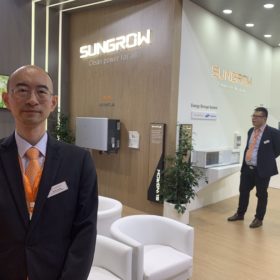
Sungrow on the MENA market: “Of course, the bigger, the better”
Having equipped a three-digit MW volume of large scale and distributed generation projects throughout the region, Sungrow is ready for a rapid regional expansion. EMEA general manager Derek Huang told pv magazine at the World Future Energy Summit about his expectations across all market segments.

“Germany’s new 4 GW solar tenders are a huge opportunity”
Germany’s new energy law includes tenders for large-scale PV that could bring around 4 GW of new capacity online. Carsten Körnig, MD of the German Solar Association, told pv magazine the tenders could generate turnover of up to €4.5 billion for EPC contractors.

Rejection of Azure Power bid confirms failure of India’s 10 GW ‘mega-tender’
Delhi-based developer Azure had bid for a 2 GW project on a single site – plus 600 MW of manufacturing capacity – as part of a much-hyped national 10 GW manufacturing-linked tender. The government has decided to reject the bid because it says the quoted price is unreasonable.

Smart-grid based hybrid wind-solar project goes online in Dubai
The Smart Grid Station wind-PV facility also incorporates a 500 kWh lithium-ion battery storage system, around 2,000 internet of things-derived sensors and smart meters. The plant was installed by the Dubai Electricity and Water Authority and Korean utility KEPCO.
