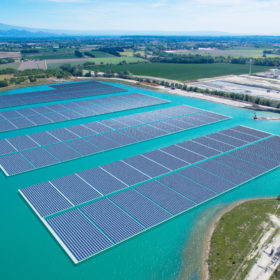
Floating PV finds a virtual battery in hydropower
Accumulated water at hydropower facilities can work as a virtual charge during the daytime while direct solar power is being used, according to a study. Reservoir-based hydropower plants will offer the best such option, as they are highly controllable and offer abundant water levels.
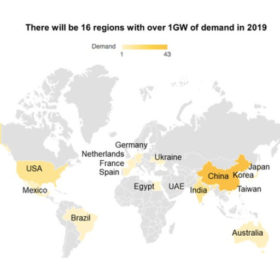
PV Info Link expects solar demand to reach 112 GW in 2019
That would mean a market increase of around 25% on this year. Demand is predicted to become particularly strong in the second half of the year.
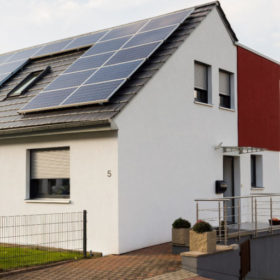
Germany added 182 MW of new PV capacity in October
The vast majority of the newly reported capacity was small and medium-sized PV rooftops. For ground-mounts, as in September, there was little volume. By the end of October, the government’s annual target of 2.5 GW of new capacity was almost reached. Solar FITs will fall another 1% in December.

Indonesia introduces net metering
With a new decree, the Indonesian Ministry of Energy and Mineral Resources has enabled the owners of residential, commercial and industrial rooftop PV systems to sell excess power to the grid. The government hopes the new provisions will result in around 1 GW of deployed PV capacity over the next three years. Doubts, however, have been raised about the attractiveness of the scheme.
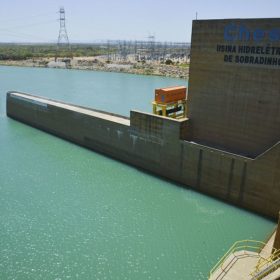
Brazilian hydroelectric company Chesf finalizes floating PV project
The 1 MW array – to be expanded to 5 MW – is being tested before official commissioning. The plant is at the Sobradinho dam, a 175 MW hydroelectric facility on the São Francisco River, in the state of Bahia.
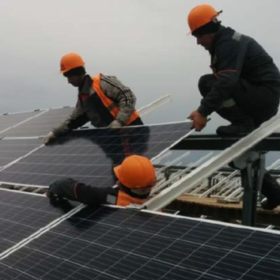
EBRD inks loan agreement for 100 MW in Kazakhstan
The European Bank for Reconstruction and Development (EBRD) and Joachim Goldbeck Holding GmbH have joined forces for the construction of a 100 MW in the Karaganda region of Kazakhstan.

Enel breaks ground on 127 MW solar PV in Spain
The capacity comprises three 40 MW sites. These PV plants are the last of seven that Enel was awarded in Spain’s third renewable energy auction, in mid-2017. Meanwhile, BayWa r.e. is close to finishing its 175 MW grid parity project in southern Spain, outside of any auctions and FIT schemes.

Tunisia shortlists developers for 500 MW tender
Up to 16 developers have prequalified in Tunisia’s tender for five PV projects totaling 500 MW, from a total of 38 participants. Unlike previous tenders, this one has attracted key international players including Enel, Engie, EDF, Fotowatio, TBEA and Canadian Solar.

Portugal: New energy minister announces first RE auction for Q2 2019
In addition to unveiling Portugal’s first renewables auction, State Secretary for Energy João Galamba has said he will fight speculation in the large-scale solar business, and introduce both longer timeframes for project construction and stronger penalties.
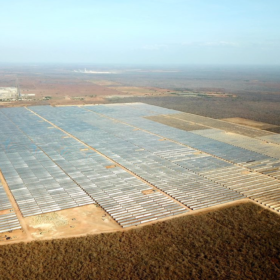
Scatec switches on 162 MW solar plant in Brazil
The US$215 million Apodi solar park is located in the city of Quixeré, in the state of Ceará. The project was selected in Brazil’s second auction for renewables, which was held in 2015.
