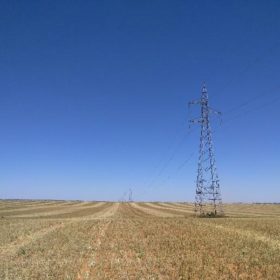
Total Eren seeks to expand Australian PV project to 450 MW
After addressing grid connection challenges, the French energy giant has launched construction on the 256.5 MW Kiamal Solar Farm. It is now looking to add a second stage of up to 194 MW, and is exploring commercial options for the approved 380 MWh of energy storage.

Lowest bid in Kazakhstan’s first solar auction reaches $0.05170/kWh
Four PV projects totaling 170 MW were selected in the first of a series of RE auctions to be held this year. Overall, the Kazakh government is planning to assign 290 MW of solar and a total of 1 GW of renewable energy capacity.
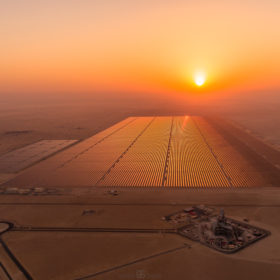
Dubai’s DEWA wants hydrogen at its 1 GW Mohammed bin Rashid Al Maktoum Solar Park
The Dubai Water and Electricity Authority (DEWA) has issued a tender for the construction of a hydrogen plant and associated facilities at the huge solar complex. In June, a pilot storage project based on NGK’s NAS Batteries was also launched at the facility.
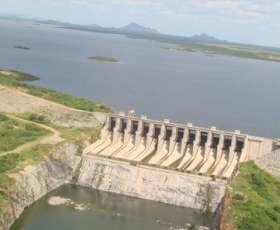
Brazilian state of Ceará begins tender for up to 45 MW of solar
The state’s Secretary of Resources intends now to conduct feasibility studies for a series of projects of up to 5 MW, which will provide local state-owned utilities Water Resources Management Company and the Water and Sewage Company with electricity.
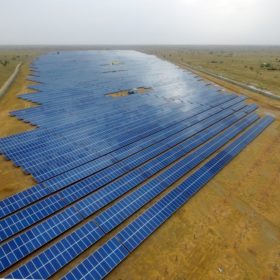
India to add up to 8.5 GW of RE in FY19
India is likely to add between 8-8.5 GW of renewable energy generation capacity in the current financial year ending March 2019, according to research and rating agency ICRA Limited.
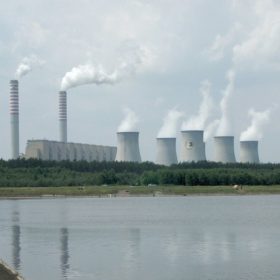
Solar, not coal, can stop hike in electricity prices in Poland
Polish research institute IEO released a new analysis showing increasing power prices in the Eastern European country, due to the current energy policy, which still strongly relies on coal power. Replacing coal with solar power, it argues, would likely result in decreasing power prices.
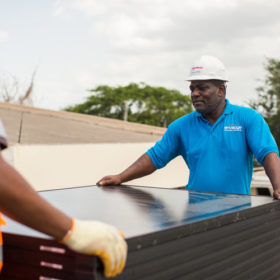
Jamaica’s prime minister calls for 50% renewables by 2030
Jamaica is currently targeting a 30% share of renewables in its energy mix by 2030. However, the nation’s prime minister says, “We can do better.”

Subsidy payment delays put northwest China PV projects at bankruptcy risk
An investigation by mainland China regulators has found that subsidy payment delays in the northwest region of Ningxia are putting PV projects at risk of bankruptcy.

Moldova plans to hold RE auctions in 2019 and 2020
The eastern European nation is being assisted by the European Bank for Reconstruction and Development with the creation of tender documentation for renewable energy auctions.
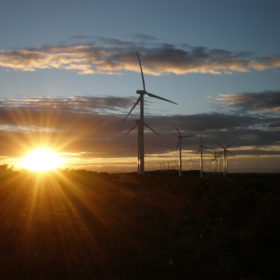
‘There is no alternative to a world of 100% renewables’
Electrifying the global energy system with clean energy is the only way to reach the targets set by the Paris agreement on climate change and avoid the catastrophic scenarios outlined by the recent IPCC report. In an interview with pv magazine, Christian Breyer – Professor of Solar Economy at Finland’s Lappeenranta University of Technology – explains a 100% renewables model is not only technically feasible, but also the cheapest and safest option. With solar and storage at its core, the future energy system envisaged by Breyer and his team will not only stop coal, but also nuclear and fossil gas, while seeing solar reach a share of around 70% of power consumption by 2050. By that time, PV technology could cost a third of its current price.
