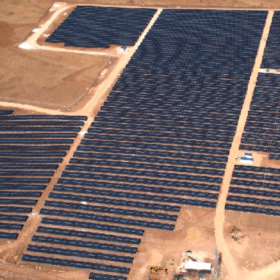
Turkey’s solar could pass 20 GW by 2026
In the most bullish scenario provided in a report published by Turkey’s Shura Energy Transition Center, solar is predicted to reach 30 GW of installed capacity by the halfway point of the next decade. The report’s most conservative scenario envisages around 6 GW.
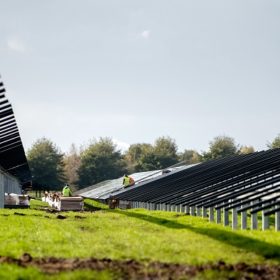
Netherlands awards 1.9 GW of PV in SDE+ 2017 autumn round
Solar was once again the source with the largest share in the latest round of the SDE+ program for large-scale renewable energy projects. Around 1.3 GW of pre-qualified solar projects, however, has been rejected. Among the selected projects is a 109 MW solar park planned for the province of Groningen.

Spain’s Unieléctrica enters solar business with 50 MW project
The Spanish power trader is planning to build its first large-scale solar power plant in the region of Murcia. The facility is intended for self-consumption and to be financed with own funds.
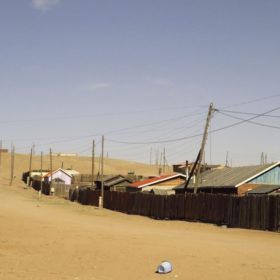
Mongolia’s largest PV power plant financed by EBRD & partners
The European Bank for Reconstruction and Development (EBRD) and investment partners will provide a $30.7 million syndicated loan to finance a 30 MW power plant, which EBRD says will be the first large-scale solar installation built in Mongolia.
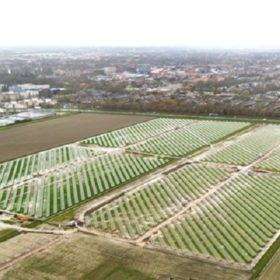
Dutch government to improve SDE+ program for sub-1 MW PV projects
The Netherlands government intends to create two more ad hoc categories for solar projects not exceeding 1 MW, and to grant them a higher level of incentive compared to those of big solar parks. The change is due the success of larger projects in previous SDE+ rounds.
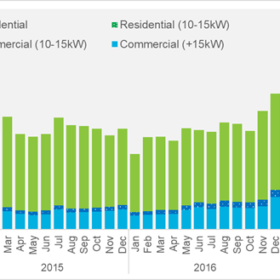
100 MW months emerge as the new normal for small-scale PV installs Down Under
Green Energy Markets’ small-scale solar figures for April reveal that above 100 MW is emerging as the new normal for monthly installations in the segment in 2018. While the month was below the record-setting 127 MW in March, April’s 109 MW indicates that installations north of 100 MW is new normal for the Australian residential and small commercial sector.

Tunisia reveals winners of 70 MW solar tender
Through the tender, the Tunisian government has awarded contracts for six 10 MW and four 1 MW projects. All have received preliminary approval from the Minister of Energy, Mines and Renewable Energies, Khaled Kaddour at the beginning of May.

Puerto Rico reviews utility-scale PV projects totaling over 280 MW
Puerto Rico’s Financial Oversight and Management Board (JSF) is examining a series of infrastructure projects that, if approved, would be fast-tracked for development and construction. Some of the PV arrays included in the infrastructure round already have PPAs signed with local utility PREPA. Two include co-located storage.
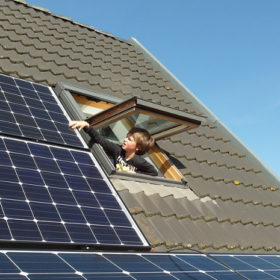
United States: California wants solar PV on all new homes
The California Energy Commission is expected to approve the 2019 Building Energy Code that calls for solar PV on all new homes. The goal is net zero residential energy usage.
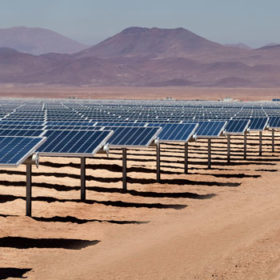
Etrion halves net loss in Q1
The Swiss-based power producer reported its Q1 2018 financial results. After the company ditched its Chilean project portfolio, some numbers look grim, but performance in the Japanese market appears more promising.
