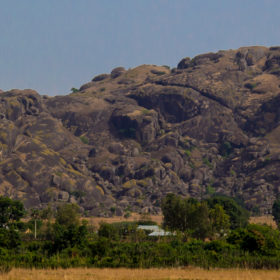
Dangote Industries and Blackstone plan 100 MW solar plant in Nigeria
The Nigerian industrial group was granted funds to conduct the feasibility study for the 100 MW facility by the USTDA. The plant would be built in Kano State, in the north of Nigeria, where the two companies are also planning to construct a 1 GW coal power plant.
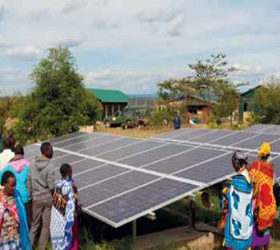
Canadian Solar supplies modules to Uganda’s largest PV project
The Chinese solar manufacturer and developer has supplied 10 MW of solar PV modules to the Soroti Photovoltaics Plant in Uganda.
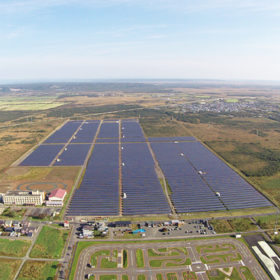
Japan may cancel 27.7 GW of approved PV capacity
The Ministry of Economy, Trade and Industry (METI) has said that it may cancel feed-in tariff (FIT) approvals for 456,000 projects, or roughly 27.6 GW of capacity, as the prospective developers of those projects failed to lock in grid-connection agreements by the government’s March 31 deadline.
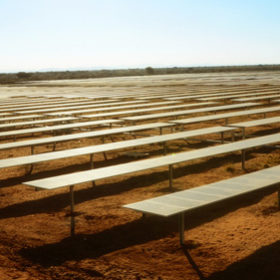
South Africa makes it easier to deploy large-scale solar in renewable energy zones
The country’s Ministry of Environmental Affairs has simplified the environmental impact assessment process for large-scale solar and wind power projects in South Africa’s eight Renewable Energy Development Zones.
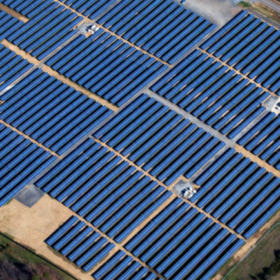
Canadian Solar snags $97 million for 92 MW U.S. project
Already under construction in conjunction with a long-term PPA with Duke Energy Progress, the new round of funding will allow the project to continue on its path to commercial operation by the third quarter.

Cambodia’s solar development moves forward with 10 MW project
The Asian Development Bank will provide Singapore-based Sunseap Group with $9.2 million. The company will use the funds to construct Cambodia’s first large-scale PV plant, a 10 MW facility located in Svay Rieng Province.

Houston, you now have solar power
The city will now receive 10.5% of its power from one of Texas’ largest utility-scale farms. The plant was built by French energy giant Engie.
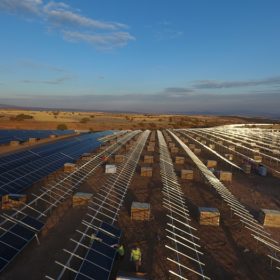
Asunim breaks ground on two Turkish PV projects totaling 42 MW
The 20 MW and 22 MW PV power plants are being built in Turkey’s southwestern province of Izmir.
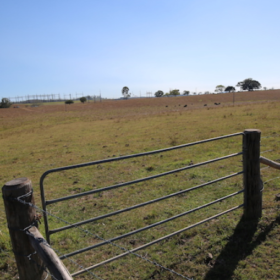
Solar Q reveals plan to install 350 MW in Australia
The company aims to build what would be one of the country’s largest PV arrays near a high-voltage substation in Queensland’s Lower Wonga region. Via the substation, the project would supply electricity to cities and towns such as Gympie, Gin Gin, Teebar Creek, Mungar, Kilkivan and Brisbane.
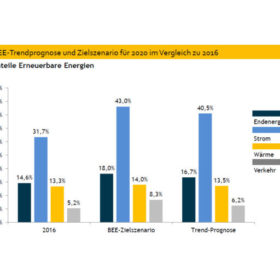
Germany could miss 2020 renewable energy target, report says
According to German renewable energy association BEE, the country could fail to reach its 2020 EU target for renewables covering 18% of its total energy consumption. The association claims that if Germany aims to achieve this target, an additional 22 TWh of electricity from renewables per year must come from the power, heat and transport sectors.
