
Cash-strapped GCL prepares to pay $189 million to ease project sell-off
The polysilicon maker, which is disposing of the solar farms managed by its New Energy business to pay down debt, is preparing to pay more than RMB1.2 billion to buy a minority stake in a subsidiary it already owns the rest of.
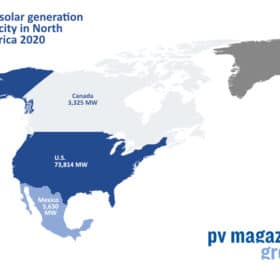
Spanish asset manager will run ‘Canada’s largest solar farm’
Copenhagen Infrastructure Partners has chosen Exus to manage the 700 MW Travers Solar Project.
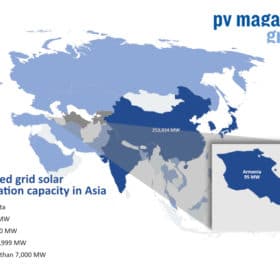
Masdar secures deal to develop ‘Armenia’s biggest utility scale solar project’
The UAE-based, state-owned renewables company had its original suggestion of a $0.0299/kWh price for the solar power generated refused by Yerevan, with the government putting the project out to a competitive tender. Masdar has won the bidding, but at a reduced energy tariff.
Chinese PV industry brief: Jinko Power announces 1.5 GW solar project and Gaoce eyeing 10 GW of wafer production
The Jinko Power unit of the solar manufacturer is planning a huge hybrid solar and wind project and China Energy Engineering is also making, slightly more modest, plans for generation capacity, as poly maker GCL continued its great PV project sell-off.

Renewables powered island can be an outlier for the Greek archipelago
The Greek Ministry of the Environment and Energy has signed a memorandum of understanding with a clutch of private companies to turn the small Aegean island of Halki green as a demonstration of the effectiveness of its planned GR-Eco Islands Initiative.

Draghi must deliver on promises to simplify Italian solar permits
The current planning regulations would mean Italy not hitting its 2030 climate change targets for another 70 years and clean energy trade bodies say the Simplification Decree being debated in parliament – which was drafted to secure €191 billion of EU cash and loans – does not go far enough.

The prospects for solar in a 1.5C world
We will need 10.7 TW of clean energy generation capacity this decade to stay on track with the most ambitious of the climate change paths agreed in Paris, which would include plenty of solar investment and jobs, according to the International Renewable Energy Agency.
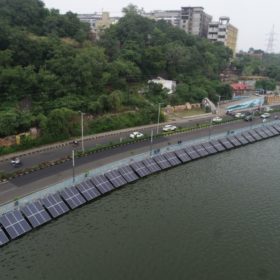
Solar panels by the side of a lake
A 500 kW solar project by the side of the Bada Talab in Bhopal, Madhya Pradesh, uses 1,540 PV panels supported through cantilever frame. The installation runs 1.2 km.

Malaysia’s commercial and industrial PV segment is thriving
The Malaysian Photovoltaic Industry Association (MPIA) has urged the country’s government to allocate more capacity under the metering scheme, as all installed power for commercial and industrial PV was already assigned a few months after the scheme’s launch.

The Hydrogen Stream: Chile and Germany join forces to develop viable green hydrogen projects
Furthermore, Texas oil field services company Baker Hughes and engineering, procurement and construction company Samsung Engineering have announced a collaboration with regards to low to zero-carbon projects utilizing carbon capture, utilization and storage (CCUS) and hydrogen technologies.
