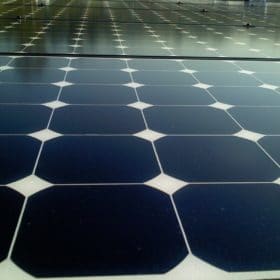
Stochastic fractal search algorithm to measure parameters of PV modules
An international research team has used, for the first time, a powerful metaheuristic and a nature-inspired algorithm to improve the estimation of the parameters of PV cells and modules. The algorithm imitates the natural phenomenon of growth and uses the diffusion process, based on random fractals.
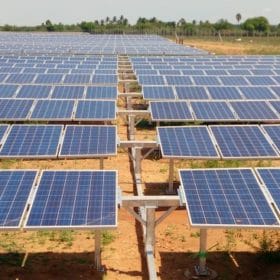
Financing large scale renewables in emerging economies
pv magazine has taken part in a webinar examining the thorny issue of financing clean energy generation in developing markets.
India’s state power companies invited to develop 5 GW of solar
The PV projects – tendered under the Central Public Sector Undertaking scheme – will be entitled to government support through ‘viability gap funding’, with the level awarded determined by reverse-bidding auctions for the project capacity.

Turkey sets fixed tariff for licensed PV projects
Large scale PV projects selected in public tenders held by the Turkish authorities will be awarded a 10-year tariff of TRL0.32/kWh ($0.044). The tariff will be indexed to inflation and dollar-euro exchange rate.

GCL-Poly cross defaults over unpaid $500m senior notes
Creditors refused to postpone payment of the three-year notes for another 36-month term and now face receiving less than 5% of the amount due once a proposed debt restructure is completed, with the balance kept back until January 2024 regardless.
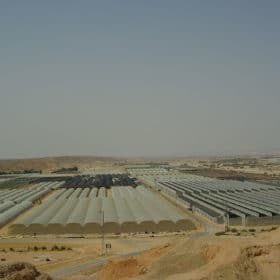
Israeli government wants to boost development of agrivoltaics
The Israel Ministry of Energy and the Ministry of Agriculture have decided to implement a pilot research program to assess the feasibility of agrivoltaic projects in the country. The possibility of combining PV and agriculture in a land with limited land availability and increasing energy demand is considered a win-win solution by the government.
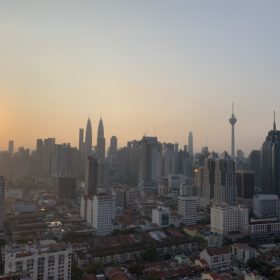
Malaysia to allocate another 500 MW of rooftop PV under net metering
The NEM 3.0 program will run until the end of 2023 and will see the participation of residential, commercial and industrial prosumers as well as public entities and government ministries.

France publishes first-quarter FITs for PV systems up to 100 kW
The feed-in tariff granted reduces each quarter, in line with how much solar capacity was installed in the previous three-month period.
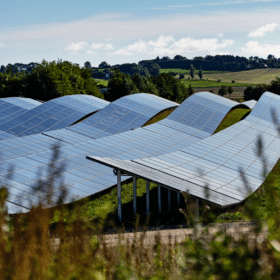
Seven-year PPA for 34 MW solar park in Denmark
Denmark’s Better Energy is building the PV facility in Denmark’s southernmost region. Danish pharmaceutical company Lundbeck has agreed to buy the power generated by the plant over a seven-year period.
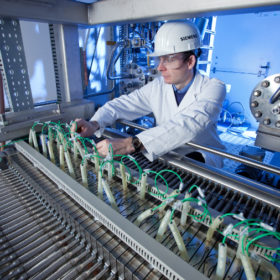
Australian-wide network of 13 clusters to spur hydrogen economy established
National Energy Resources Australia has actioned its instructions from the 2019 National Hydrogen Strategy by investing an initial $1.75 million in 13 regional clusters across all states and territories designed to establish Australia’s global identity in hydrogen technology and expertise.
