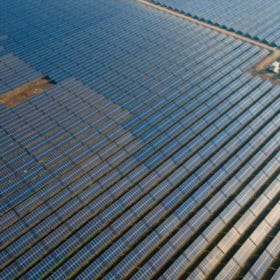
Canadian investor plans 1.3 GW renewable energy hub in South Australia
Amp Energy, a Canadian clean energy investor with a growing Australia portfolio, has unveiled a new 1.3 GW renewables expansion strategy. Its plan includes at least three massive PV projects, two of which could support South Australia’s green hydrogen aims.
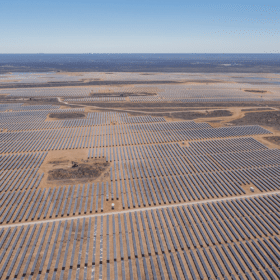
Massive solar-plus-storage plant comes online in the United States
The 420 MW/40 MW storage-plus-storage facility was deployed by the Danish energy company Ørsted on a 3,600-acre site alongside existing oil and gas installations in Texas.

Chinese PV Industry Brief: Xinte seeks to raise $309 million for 100,000-ton polysilicon factory
Furthermore, Luoyang Glass reported first-quarter net profits of RMB136 million (US$21 million) and TBEA Xinjiang New Energy announced the settlement of a dispute over a 99 MW wind farm.
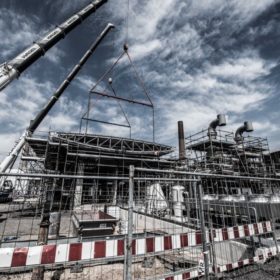
The Hydrogen Stream: Rosatom, EDF join forces, Shell builds Europe’s largest PEM electrolyzer
Moreover, the Germany-based Fraunhofer Institute for Chemical Technology has announced it is progressing with its research to reduce the cost of PEM water electrolysis and the Spanish government has established the criteria for its first pre-selection of renewable hydrogen projects.
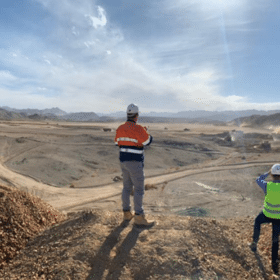
Solar-plus-storage for Egyptian gold mine
German developer Juwi plans to have a 36 MW off-grid solar plant and 7.5 MW of battery storage operational at the Sukari mine during the second quarter of next year.

Brazil’s solar PPA market reaches 8.4 GW
According to a recent report from Brazilian consultancy Greener, unsubsidized solar projects are proliferating in the Latin American country. The study also reveals that the utility scale PV projects that are in an early or intermediate stage of development, have a combined capacity of 98.9 GW.
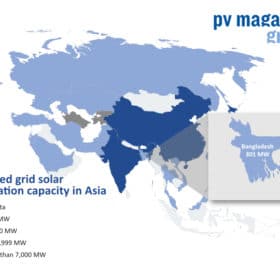
India to finance 100 MW Bangladeshi solar plant
The federal government will provide $131 million of soft loans for a $177 million, 100 MW solar park near the Jamuna river in Bangladesh’s Jamalpur district, where a second park of a similar size is being planned by Dhaka and a Chinese partner.
Big solar for Western Balkans disused coal mine
Land scarcity and renewables prices have been long considered significant hurdles for renewable developments in the hilly Balkans. Still, the European Bank for Reconstruction and Development (EBRD) sees solid opportunities in floating PV on public dams, PV modules on rooftops, and renewables projects in landfills and disused coal mines.
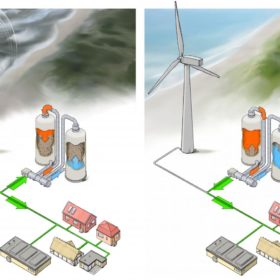
Storing large scale renewables with basalt stones
A Danish consortium is seeking to store electricity from large scale renewable energy plants in the form of thermal energy in big tanks containing crushed, pea-sized stones made of basalt. The first 10 MWh demonstrator is planned to be developed in Denmark and to be powered by a wind facility. Another project is also under development in the United States and is planned to be linked to a solar plant.
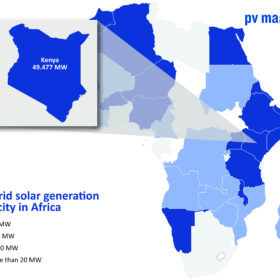
A case study in African solar policy problems
Dutch off-grid solar organization GOGLA has focused on the negative effect of the reimposition of VAT and import duties on solar lighting systems in Kenya as emblematic of the lack of legislative support for clean energy across the continent.
