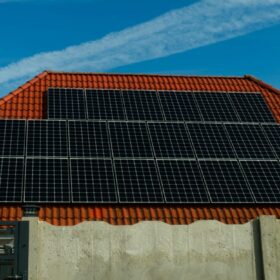
Netherlands to phase out net-metering scheme in 2027
The new government coalition in the Netherlands says the nation’s current net-metering scheme will be maintained until the end of 2026. The previous Parliament had rejected a proposal to cancel the scheme by the end of 2025.

US startup debuts wall-mountable residential heat pump
US-based Quilt has unveiled a residential heat pump with a coefficient of performance (COP) of up to 4 and noise levels of 27 dBA to 47 dBA. The startup recently raised $33 million (€30 million) from a group of investors.

3D printed clamps for front-surface PV mounting on wood racking
A research team proposed a new PV mounting solution relying on two types of spacers and two types of clamps that can be printed with common printing materials. The cost of the different solutions presented varies from CAD1.50 ($1.10) to CAD3.83.

DAH Solar launches 380 W BIPV module
The Chinese manufacturer said the new product has an efficiency of up to 19.46% and a temperature coefficient of -0.30% per C. It is available in bright red, light gray, brown, green, blue-green, orange, and ocean blue.
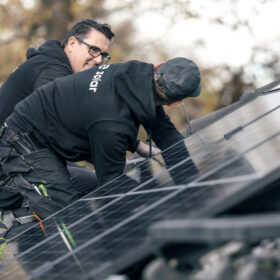
German PV system prices down by over 4% since November
The Selfmade Energy online platform says that prices for PV systems and battery storage systems fell by more than 4% between November 2023 and March 2024. In March, for example, 6 kW PV systems without batteries were sold for between €1.66 ($1.79)/W and €2.10/W.
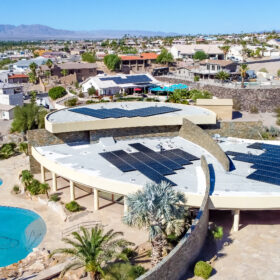
‘We must push back on net billing’
With California’s NEM 3.0 legislation having gutted panel sales and Arizona heading a bevy of other US states preparing to reduce solar-export payments, it’s time the United States solar industry stepped up, for ourselves as well as our customers.

M-Tec presents residential air-source heat pump
The Austrian manufacturer said its new heat pump can achieve a seasonal coefficient of performance of up to 4.7 and flow temperatures of up to 75 C. It is available with sizes ranging from 2 kW to 7 kW.
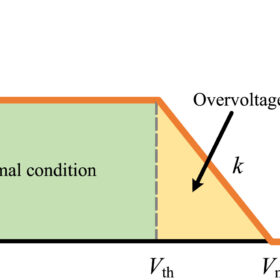
New PV system design strategy avoids oversizing, curtailment
A group of scientists in Thailand has outlined a new approach to avoid oversizing and overvoltage in energy markets applying volt-watt droop curtailment strategies. The novel methodology leads to a reduction in a PV system’s net present value but also increases its levelized cost of energy.

Renew Home launches virtual power plant solution
Renew Home, a partnership between Google Nest Renew and OhmConnect, aims to expand from 3 GW of electrical energy use to 50 GW by 2030.

Climate disaster hits solar in southern Brazil
Heavy rains recently triggered floods in Brazil’s Rio Grande do Sul state when Lake Guaíba and the Taquari River and Uruguay River overflowed, reaching more than 5.30 meters and affecting more than 1.95 million people. The death toll stands at 143, with 125 still missing. The authorities still have yet to assess the losses from submerged or affected PV plants.
