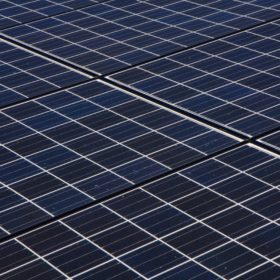
EU adopts directive allowing reduced VAT on several goods, including solar panels
The Directive No. 2022/542 was published in the Official Journal of the European Union on April 5. According to the new provisions, member states will be free to apply a VAT rate of 0% to 5%.
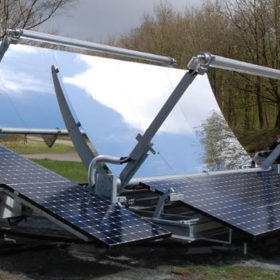
Concentrating solar power system for building applications, usable with PV
Conceived by a German start-up, the system is claimed to achieve a 75% efficiency in converting direct radiation into heat. It may be either equipped with solar trackers or photovoltaic modules, which would both occupy the same space on the front and lateral sides of the installations.

Bosnian Serb republic to introduce net metering for residential PV
Elektroprivreda Republike Srpske (ERS), a utility in the Republic of Srpska – one of the two entities of Bosnia and Herzegovina – will introduce a net-metering scheme for residential PV before the end of this year.
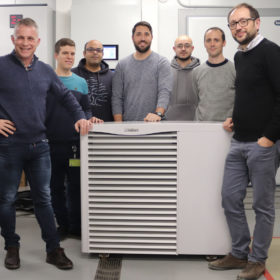
Residential heat pump produces water up to 75 C
Scientists in Spain have developed a new heat pump that can produce 6.49 kWh of heat for each kilowatt-hour of power it consumes. The device could generate hot water at a temperature of up to 75 C.
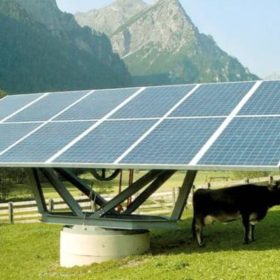
Austria launches €240 million rebate scheme for rooftop PV
The Austrian government has more than quadrupled the budget for the 2022 edition of its rooftop solar rebate program.
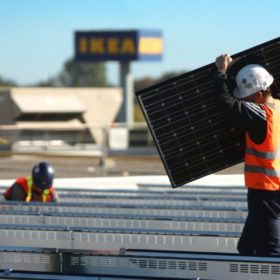
Ikea invests €340 million in solar
Ikea’s holding company, INGKA Holding, will invest €340 million ($371 million) to acquire nine PV systems from Enerparc. In the future, Ikea said it will work with Svea Solar to sell residential PV systems.
Germany introduces new provisions to support solar, wind
Germany has come up with new measures that could lead to a cumulative installed PV capacity of 215GW by 2030. Higher feed-in tariffs for rooftop PV will likely be announced soon.

Solar the energy workhorse in latest gloomy IPCC verdict
Photovoltaics can wipe out 4.25 billion tons of carbon emissions every year this decade, according to the UN Intergovernmental Panel on Climate Change. Even so, the actions announced so far remain way short of what is needed, with capital flows to fossil fuels still greater than the cash directed toward combating climate change.
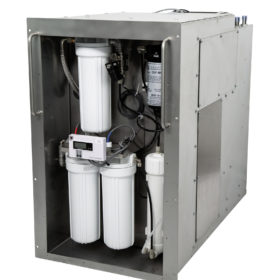
Modular electrolyzer for residential, commercial applications
Germany’s Ostermeier H2ydrogen Solutions has developed an electrolyzer that works with tap water, with bottles to store hydrogen and a fuel cell or a Wankel engine to produce electricity. The system has a capacity ranging from 1kW to 100 kW, which corresponds to hydrogen production of 0.2-20 Nm3/h.

Enphase to produce micro-inverters in Romania
US energy specialist Enphase will produce micro-inverters at a Flextronics factory in Timisoara, Romania, from the first quarter of 2023.
