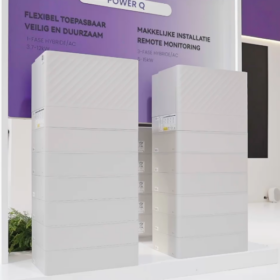
Fox ESS presents residential storage system line with 89.6% round-trip efficiency
The new series features single- and three-phase systems with scalable LFP battery integration. Designed for rapid whole-house backup and VPP applications, the new product delivers up to 89.6 % round-trip efficiency, according to the manufacturer.

DMEGC launches 475 W full-black solar module
The Chinese manufacturer said its new rooftop solar module offers 455–475 W power, 22.8–23.8% efficiency, 96-cell double-glass design, and IP68 protection.
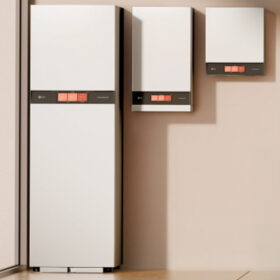
LG debuts new indoor air-to-water heat pumps
The Korean manufacturer has expanded its Therma V R290 heat pump line with three indoor unit options to improve installation flexibility. The new products are designed to deliver heating performance at ambient temperatures as low as -28 C and domestic hot water output of up to 75 C.
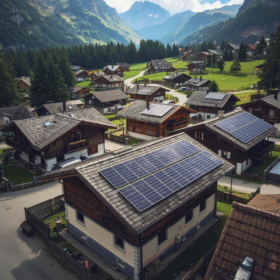
Is Switzerland going back contact?
In 2025, back-contact solar modules from Aiko Solar and Longi accounted for more than 50% of the Swiss market, driven by strong demand for high-efficiency rooftop PV systems, according to a new report by Eturnity and the Bern University of Applied Sciences.
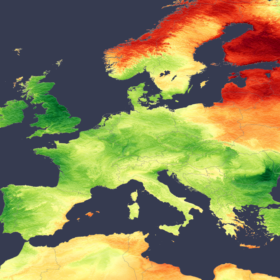
Cold, clear skies boost northeastern Europe’s solar while storms dim the west
In a new weekly update for pv magazine, Solcast, a DNV company, reports that February saw a sharp divide in Europe’s solar conditions. Northeastern regions experienced clear, cold weather with irradiance 20% above average, while western and southern Europe endured persistent storms and widespread irradiance deficits.

Albania adds over 180 MW of solar in 2025
Albania’s cumulative solar capacity now likely stands between 600 MW and 650 MW, with installations to date led by the utility-scale segment and growing interest from the C&I market.

Heat pumps are transforming domestic hot water production – How to avoid hygiene risks?
Heat pumps are increasingly used for domestic hot water in Europe due to their efficiency and compatibility with solar power, but their lower operating temperatures can create conditions where Legionella pneumophila may grow if systems are poorly designed. Proper hydraulic design, temperature control, and periodic thermal disinfection ensure both high efficiency and safe, hygienic operation.

Russia adds around 100 MW of solar in 2025
GlobalData says Russia added an estimated 100 MW of solar last year, taking total installed solar to around 3.1 GW. The consultancy is forecasting annual additions of about 200 MW over the next ten years, taking the country’s cumulative solar capacity to 5.3 GW by 2035.
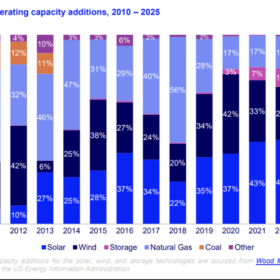
US solar installations reach 43 GW in 2025 despite slowdown
Solar accounted for 54% of new US generation capacity in 2025, retaining its position as the top technology for the fifth straight year, while PV and storage together made up 79% of new electrical capacity, according to the latest report from the Solar Energy Industries Association (SEIA) and Wood Mackenzie.

EU auditors warn energy community targets outpace reality
The European Court of Auditors says in a new report that EU policies supporting energy communities are progressing slowly and that the bloc’s goal of establishing one renewable energy community in every municipality with more than 10,000 residents by 2025 is unlikely to be met.
