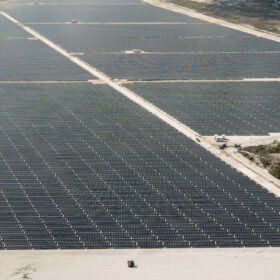
The world added 605 GW of new PV capacity in 2025, says IEA
Latest report from the International Energy Agency says last year’s 600 TWh increase in solar PV was the largest-ever electricity generation increase by any source in one year, outside of periods of post-crisis recovery.

Philippines adds 899 MW of solar in 2025
Figures from the International Renewable Energy Agency say the Philippines’ cumulative solar capacity neared 3.9 GW by the end of last year. Deployment rates look set to increase in the coming years, led by a gigawatt-sized pipeline of projects procured under the country’s green energy auctions.

Samsung launches residential air-to-water heat pump reaching SCOP of up to 4.9
The Korean manufacturer said its new heat pump system can achieve a seasonal coefficient of performance of up to 4.9 under low-temperature floor heating conditions, and approximately 3.78 under higher-temperature operation at 55 C.
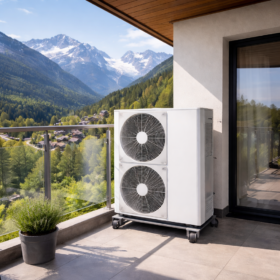
Could global warming improve heat pump efficiency in Alpine regions?
Researchers in Italy analyzed air-to-water heat pump performance in Alpine regions, focusing on how start-up and defrost cycles affect efficiency under current and future climate conditions. Their simulations show that while warmer temperatures slightly reduce defrosting losses and modestly improve efficiency, start-up cycling losses remain significant and continue to limit overall performance gains.

Solar rebound effect could raise Europe’s electricity demand 5% by 2050
Research from Germany’s FernUniversität Hagen finds the solar rebound effect, caused by households increasing their total electricity consumption after installing a solar system, is currently a blind stop in Europe’s energy system planning and abatement scenarios.

Cyber threats for PV: What are cloud platform and software-as-a-service exploitation attacks and how do they work
Cloud and SaaS platforms are now central to PV plant operations, but their centralization creates a high-impact cybersecurity risk where a single compromise can expose or disrupt entire fleets of installations. Attackers exploit weaknesses like stolen credentials, insecure APIs, multi-tenant flaws, and platform vulnerabilities, making strong identity controls, secure APIs, and continuous monitoring essential defenses.

JinkoSolar debuts rooftop PV module weighing 7 kg/m2
The Chinese manufacturer said its lightweight Light Diamond TOPCon module delivers 560 W at 24.94% efficiency.

Italy installs 1.43 GW of PV in Q1
The country reached a cumulative installed PV capacity of 44.9 GW at the end of March, according to recent figures from Italian PV association Italia Solar.

Cyber threats for PV: What are supply chain attacks and how do they work
Supply chain attacks compromise PV systems by targeting trusted vendors, software, or hardware components, allowing attackers to infiltrate systems indirectly through legitimate channels. These attacks can disrupt operations, introduce hidden vulnerabilities, and impact multiple assets at once, making vendor security and system validation critical for resilience.

France deploys 1.41 GW of solar in Q1
New figures from grid operator Enedis reveal that France added 1,418 MW of new PV capacity in Q1 2026, roughly matching Q1 2025, despite a broader sector slowdown linked to regulatory changes and delayed tenders.
