
Iraq takes first concrete steps into solar
The United Nations Development Program wants consultants for Iraq’s PV policy, aimed at helping the Ministry of Electricity in the construction of utility-scale solar plants, as well as in the deployment of 5 MW of residential PV. Frost and Sullivan forecasts around 5 GW of solar capacity may be installed by 2028.

Ikea begins online sale of PV residential module systems in Germany
This week, the Swedish furniture giant will begin offering its PV systems throughout Germany via the internet. The company’s “Solstrale” offer has been tested in five markets and Ikea has said it is “very satisfied” with the response.

Off-grid Swedish housing block to be supplied 100% by PV, hydrogen
Upon completion, the long-term storage benefits of compressed hydrogen, coupled with an abundance of solar radiation in the summer months, will allow for a fully energy-sufficient 172 home apartment block in Sweden.
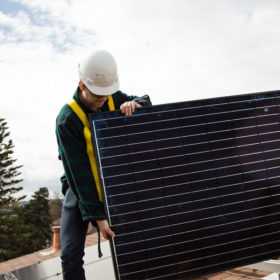
Australia: Federal Energy Minister sends rooftop PV safety warning
At the end of another year or record rooftop PV installations, national Minister for Energy Angus Taylor warns Australian state governments to “consider the potential risks” of rapid solar industry growth.

The outlook is sunny for solar in 2019, according to Credit Suisse
Although the investment bank says large manufacturers will suffer from continuing panel price falls, developers will be able to take advantage and experts predict a resurgence in the global market next year.
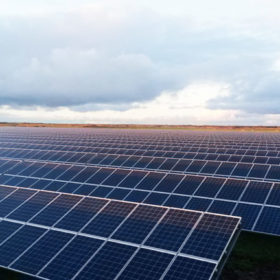
2019 PV installations to hit 123 GW, global balance shifting, says IHS Markit
More predictions from IHS Markit reveal that 123 GW of solar PV installations are expected in 2019 – up 18% on the capacity additions expected this year. It also sees a market shift away from China, with two thirds of capacity located elsewhere. The overcapacity situation is also expected to ease.

UK export payments won’t end – but they will get much smaller
The government has finally announced the results of its consultation on ending FIT export payments. With the vast majority of respondents against the proposal… it has responded by going ahead anyway.

Zola receives $32.5 million for expansion in Tanzania
Zola Electric has received financial backing worth $32.5 million from social investment firm Symbiotics and the Dutch development bank FMO. The lending facility will be used to grow Zola’s operations in Tanzania over the following five years.
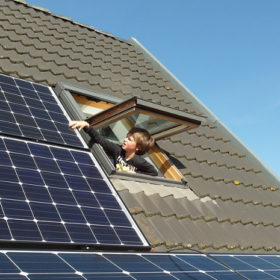
Room for US residential solar to reach 41 GW by 2025
A new analysis by Credit Suisse forecasts that installed residential solar capacity in the United States could grow more than 3x to reach 41 GW by 2025, and shows that there is plenty of space on rooftops to do this.

Policy plan for rapid transition to 100% renewable-powered Europe handed to politicians
Politicians take note: “The energy transition is not a question of technical feasibility or economic viability, but one of political will.” Indeed, according to a new study, it is possible to rapidly transition to a Europe 100% powered by renewables and with zero greenhouse gas emissions. Solar PV leads the charge, followed by wind. Overall, eight policy recommendations have been laid out to achieve this bold goal by 2050.
