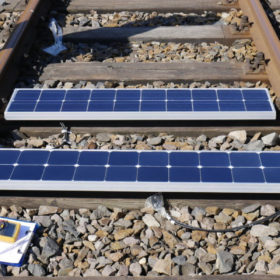
Solar for railways
Germany’s TÜV Rheinland is investigating how photovoltaics could be used for powering railway traction networks in a 14-month research project.
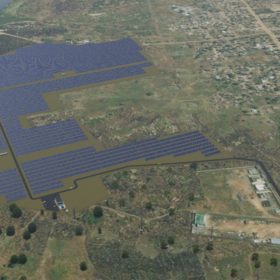
Financial close for Mozambique’s first solar-plus-storage project
Anglo-Norwegian public funding body Globeleq has said the 19 MWp/2MW-7 MWh Cuamba project will be supplying electricity during the second half of next year.
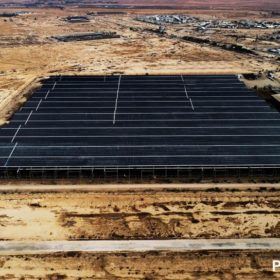
Israel allocates 1.14 GW of PV across two tenders, lowest price comes in at $0.02751/kWh
The Israeli authorities allocated more than 1.14 GW of PV capacity and 210 MWh of storage across two different tenders. In a first procurement exercise for the 330 MW/210 MWh Dimona solar-plus-storage project the winner was Israeli company Shikun & Binui Holdings Ltd. In another tender for innovative PV projects local developer Prime Energy secured 475 MW with the final average price of $0.0541/kWh.
Baywa re wraps up major virtual PPA with Finnish packaging giant
The German clean power company and Huhtamaki have signed a 10-year deal that will ensure the construction of two solar farms in southern Spain with an aggregate generation capacity of around 135 MWp.

Rwanda seeks consultants to support development of mini-grids
The Development Bank of Rwanda wants to finance developers to build photovoltaic and mini-grids ranging in size from 10 kW to 1 MW.
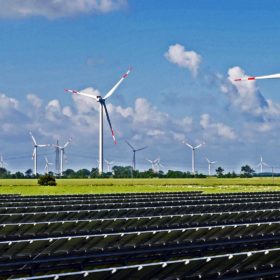
Tata Power builds 300 MW hybrid wind-solar project in India
The project was secured by Tata Power in an auction held by the Maharashtra State Electricity Distribution Company Limited (MSEDCL).
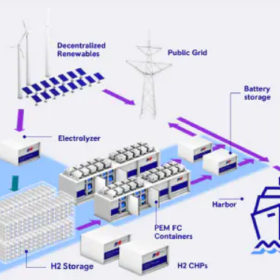
The Hydrogen Stream: Fuel cell solutions for electrical peak load coverage
Rolls-Royce is supplying its mtu hydrogen technology for the container terminal currently under construction at the Port of Duisburg in Germany. Furthermore, German energy company RWE wants to produce green hydrogen at the Pembroke Power Station site in Wales and Norway’s Scatec discussed plans for large-scale seawater desalination, hydrogen and ammonia production based on renewable power with the Egyptian government. Meanwhile, the EU has adopted a set of legislative proposals to decarbonize the EU gas market by facilitating the uptake of low carbon gases, including hydrogen.
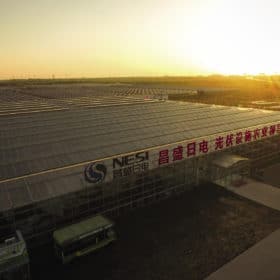
Chinese PV Industry Brief: CPIA expects no more than 55 GW of new PV capacity this year
The world’s biggest solar market is expected to add between 45 and 55 GW of new solar in 2021, the head of the China Photovoltaic Industry Association has revealed. Furthermore, Longi has further lowered its wafer prices and Xinyi Solar said it wants to build a new US$942 million solar glass factory in Yunnan Province.
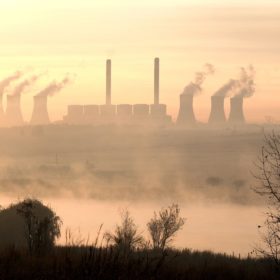
South African utility Eskom allocates land for renewable energy producers
The land will be available for lease in a competitive bidding process. Selected developers will be offered a 20-year contract and the possibility of deploying solar parks with a capacity of up to 100 MW. Eskom says the move will help alleviate South Africa’s energy crisis.
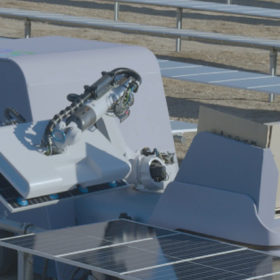
New robot for solar plant construction from AES Corporation
The AI-enabled robot is claimed to ensure faster and more efficient deployment of solar modules in utility scale projects.
