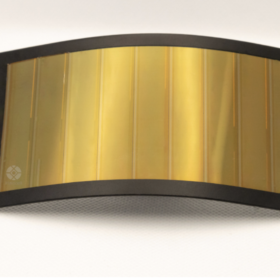
Halocell Energy, Sofab Inks advance perovskite collaboration
An ongoing collaboration between Australia’s Halocell Energy and U.S-based Sofab Inks finds that perovskite modules incorporating Sofab’s Tinfab electron transport layer maintain approximately 100% of their normalized efficiency after 1,300 hours under accelerated combined light and damp-heat testing.

Dismantled 28-year-old PV system reveals wasps nest in junction box
Researchers in Austria discovered a wasp nest inside the junction box of a 1998 rooftop PV module, illustrating how insects can exploit even sealed electrical components. The affected module showed significant degradation and partial failure, though overall results confirmed the surprising durability of older PV module designs.

Cooling solar modules with nanofluids based on graphene oxide, Mxene
An international research group has developed a novel solar module passive cooling system that integrates three-dimensional oscillating heat pipe (3D-OHP) with different combinations of nanofluids based on hybrid graphene oxide (GO) and a two-dimensional titanium carbide known as MXene (Ti3C2Tx). MXene compounds take their name from their graphene-like morphology and are made via selective etching of […]

U.S.-Israeli conflict with Iran tests solar supply
The U.S.-Israeli conflict with Iran is unlikely to materially affect solar manufacturing projects in the Middle East for now, as most of these investments remain at an early stage. OPIS analyst Brian Ng sees the most immediate risk in logistics. If disruptions persist, shipments of solar products into the region could be delayed and export pricing may turn volatile.

Chinese module trading slows after export tax rebate cancellation
In a new weekly update for pv magazine, OPIS, a Dow Jones company, provides a quick look at the main price trends in the global PV industry.
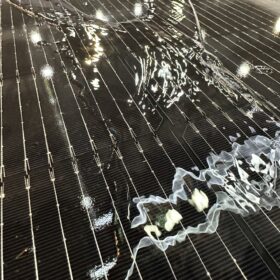
Internet-of-Things could bring solar module water cooling closer to commercial viability
A Czech team developed an IoT system using MQTT to autonomously cool PV panels, boosting daily energy yield by 7.38% with a positive net energy balance.
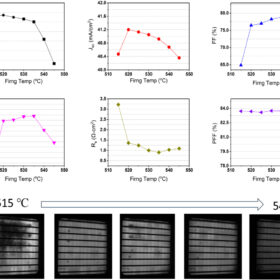
U.S. scientists build copper-contacted TOPCon solar cell with 24.3% efficiency
The TOPCon solar cells with fabricated with screen-printed, fire-through copper rear contacts and silver front contacts, using laser-enhanced contact optimization (LECO) to significantly reduce contact resistivity. Optimized copper cells achieved 24.3% efficiency, comparable to Ag-contacted cells, with excellent stability.

New tech reduces silver use in TOPCon solar cells by a factor of 10
Researchers at the Fraunhofer Institute for Solar Energy Systems ISE have reduced silver consumption in solar cell metallization to 1.1 mg/Wp using an electrodeposition-based process, down from current levels of 10–12 mg/Wp.

How to delaminate end-of-life solar modules with ultrasonic cavitation
A research team has developed a solvent-free method using ultrasonic cavitation to delaminate end-of-life crystalline-silicon PV modules, fully separating the glass and front EVA layer while partially releasing c-Si fragments. The proposed approach achieved an 82.2% mass-based delamination efficiency, highlighting ultrasonic cavitation as a sustainable alternative for PV module recycling.
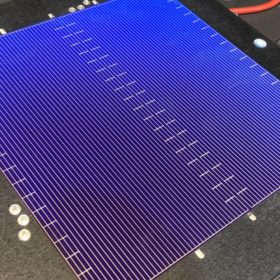
How LECO process could push TOPCon solar cell efficiency beyond 26%
A new UNSW study shows that laser-enhanced contact optimization (LECO) can boost industrial TOPCon solar cell efficiency by improving contact properties and reducing recombination losses. By combining optimized firing conditions with LECO “repair” of contacts, the approach balances recombination and resistance, offering a practical path for conventional TOPCon cells to compete with PV technologies offering higher efficiencies.
