
Optimizing photovoltaic systems: Best practices for economic, technical key performance indicators
As the global solar energy industry grows, so does the need for accurate monitoring of performance and financial viability. The latest report by IEA PVPS Task 13, “Best Practice Guidelines for the Use of Economic and Technical KPIs,” provides a comprehensive framework to address this issue. This article explores the importance, methodologies, and applications of Key Performance Indicators (KPIs), with a focus on their role in optimizing PV systems.
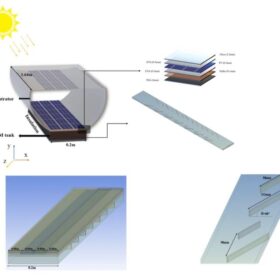
Scientists design concentrating PV system equipped with cooling, waste heat recovery tech
Scientists in Iran have designed a CPV system that integrates a paraffin-based nanomaterials cooling system with fin, as well as thermoelectric generators that turns wast heat into electricity. Simulated results demonstrated that, with the cooling system in place, the PV efficiency improves by approximately 16.46% in clean conditions.

Miniature field testing shows alpine PV array performs better than expected
Researchers have constructed a miniature PV field at an altitude of 2,500 m in Switzerland. They tested it across 80 different positioning settings and compared the results to the guidelines provided by the Swiss government for a subsidy program. They found that the simulated yield was underestimated by up to 16%.

Optimized gettering can improve heterojunction solar cell efficiency by 0.21%
Researchers in China have investigated the impact of phosphorus diffusion gettering on industrial silicon heterojunction solar cell and have found that, with an optimized gas flow, higher efficiencies can be achieved.
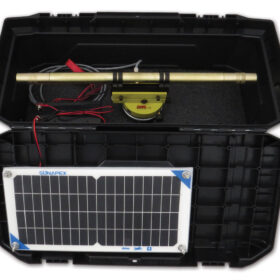
Laser tools for solar pylon, tracker alignment
Laser Tools Co. updated its laser-guided toolkits for ground-mounted solar installations.

Huasun debuts 720 W solar modules for vertical PV projects
Huasun has launched its 720 W Kunlun G12 dual-glass bifacial solar panels for vertical PV projects at the World Future Economic Summit in Abu Dhabi. The panels feature a 23.2% power conversion efficiency and enhanced mechanical stress resistance with a steel alloy frame.

Inverted perovskite solar cell based on self-assembled bilayer achieves 26.08% efficiency
The proposed bilayer is used as a hole contact material that ensures an improved adhesive contact with the perovskite film. It consists of a phosphonic acid self-assembled monolayer with an upper layer made of an organic compound known as triphenylamine.
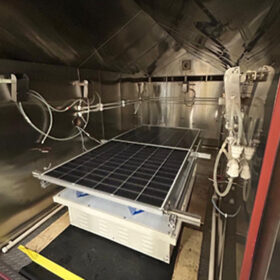
The impact of wind-induced vibrations on solar modules
Researchers from the UAE and Singapore have assessed how wind-induced vibrations increase mechanical stress in PV panels and have found these vibrations could lead to microcracks, more serious mechanical failures, misalignments, and ultimately to the system collapse.
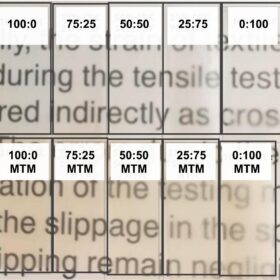
Researchers develop high transparency nanocellulose film for photovoltaics, packaging
The nanocellulose film can be used for light management as its light scattering is adjustable. It also exhibits a transmittance of over 80% at 550 nm.
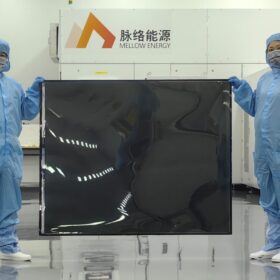
Chinese startup unveils flexible perovskite photovoltaic modules with 15.6% efficiency
Mellow Energy claims its ML-Flex panel is currently the world’s largest flexible perovskite solar module. Available in five versions with power output ranging from 260 W to 300 W, the module measures 1,200 mm x 1,600 mm and weighs only 2.04 kg.
